video pipe inspection services

NASCCO-certified inspection services with cross bore detection

GPRS Video Pipe Inspection

GPRS provides NASSCO-certified video pipe inspection services and main line sewer scope inspections with PACP, LACP, and MACP-certified Project Managers to assess pipe conditions, document defects, and map sewer infrastructure. Detailed WinCan VPI reports are securely delivered through our SiteMap® GIS platform for easy access and seamless team coordination.

Understanding the condition, location, and flow direction of your storm and sanitary sewer infrastructure helps your team avoid rework, delays, safety risks, and costly emergencies. Video pipe inspection turns buried unknowns into actionable data, helping you identify illicit tie-ins, detect cross bores, uncover pipe defects, and mitigate contamination risks before they become problems.

sitemap® sewer layer:

Your Sewer System, Fully Visualized.
See every sewer line, defect, and flow direction in one GIS platform, with complete water and sewer system mapping.

See SiteMap Sewer Layer in Action
Whats underneath matters | GPRS
GPRS Video Pipe Inspection
What is Video Pipe Inspection?

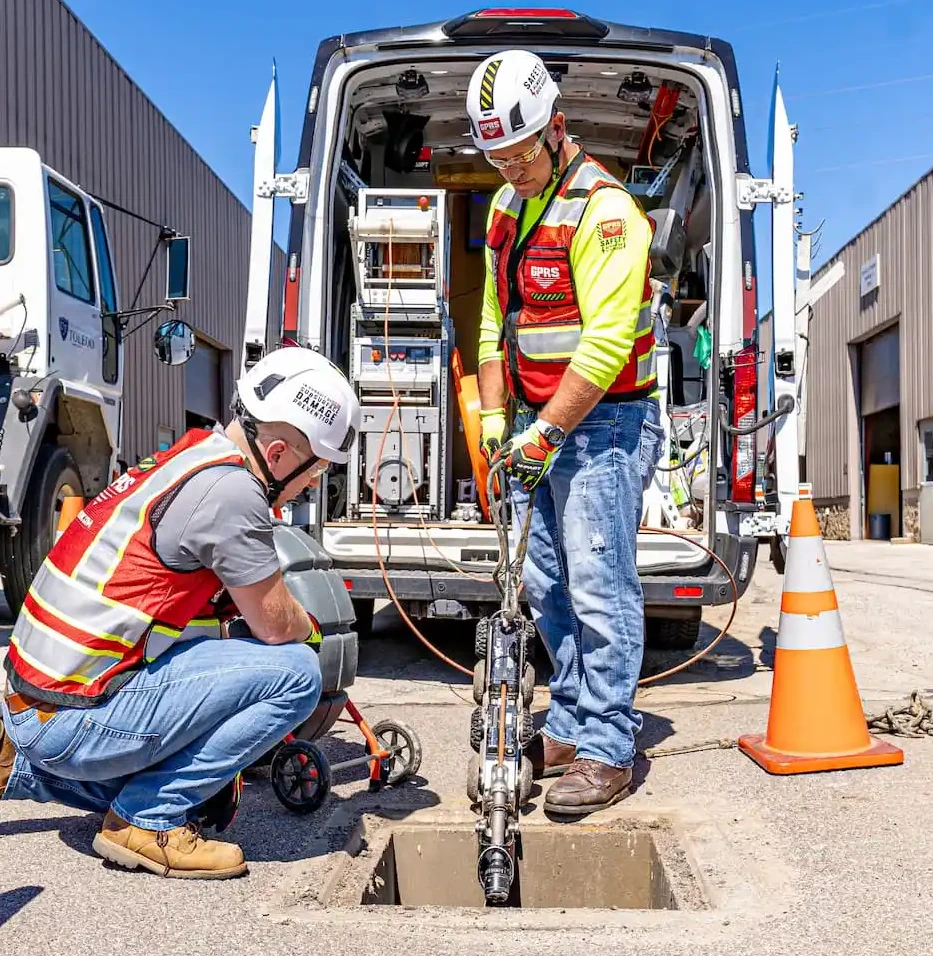
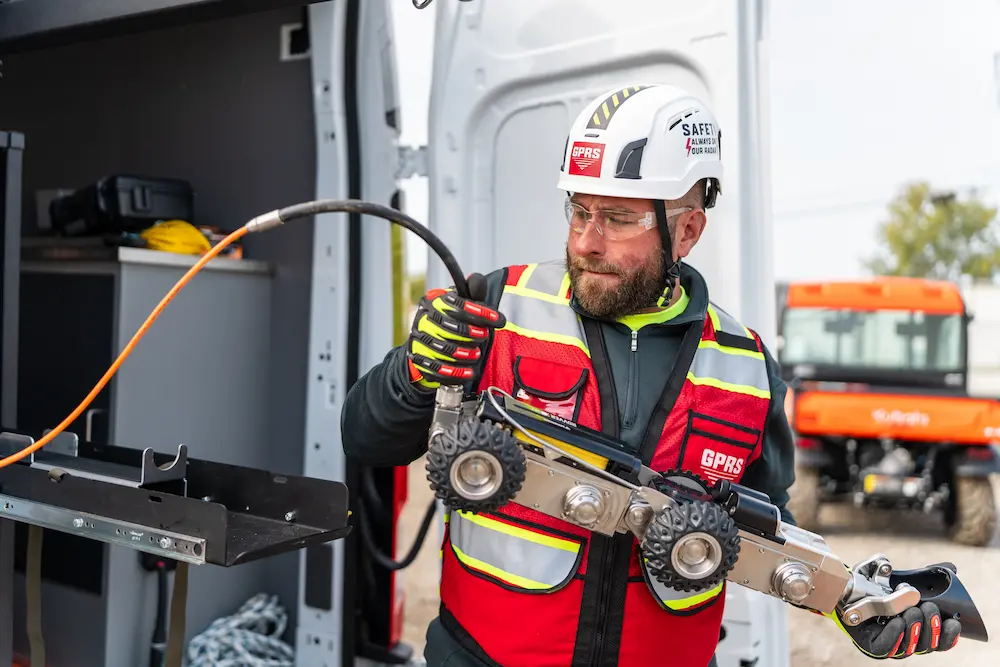
Video pipe inspection (VPI), also known as CCTV sewer inspection or sewer scoping, utilizes CCTV cameras mounted on robotic crawlers or lateral launch cameras, to inspect the interior of sanitary sewers, storm sewers, sewer laterals, manholes, and mainline systems without excavation. The camera transmits live footage that a GPRS Project Manager reviews to document pipe defects, assess structural condition, and identify cross bores, cracks, root intrusion, and offset joints. GPRS delivers VPI findings and maps via their SiteMap GIS infrastructure platform. A GPRS VPI report includes an interactive WinCan report, with all pipe segments and defects mapped, PACP-coded, and catalogued by severity.

///video pipe inspection services

GPRS Cross Bore Detection
Cross bore Mitigation
A cross bore occurs when a sewer line, water line, or other underground utility line is installed through an existing pipe, usually through horizontal directional drilling. These hidden conflicts can cause backups, pipe damage, and serious safety risks. GPRS uses video pipe inspection to locate cross bores and document sewer systems before or after excavation or trenchless work.
GPRS Mainline Sewer Inspections
Mainline Inspections
Mainline sewer inspections identify defects, leaks, and structural damage in sanitary and storm pipes. GPRS uses NASSCO-certified CCTV crawler cameras to assess pipe condition, locate laterals, and map sewer systems. PACP, LACP, and MACP-coded pipe conditions, defects, and inspection data is delivered in a WinCan report and is accessible 24/7 in SiteMap.
GORS Manhole Inspections
Manhole Inspections
Manhole inspections test the condition, structure, and connectivity of sewer access points. GPRS Project Managers are NASSCO MACP-certified to document defects and verify system connections to support maintenance planning and reduce infrastructure risk.
GPRS Sewer Lateral Inspections
Sewer Lateral Inspections
Sewer lateral inspections assess private service lines that connect buildings to main sewer systems. GPRS uses push cameras (rodders) and lateral launch cameras to identify and catalogue pipe defects to NASSCO LACP standards, locate cross bores, and map lateral lines for a complete system record.
Water & Sewer System Mapping
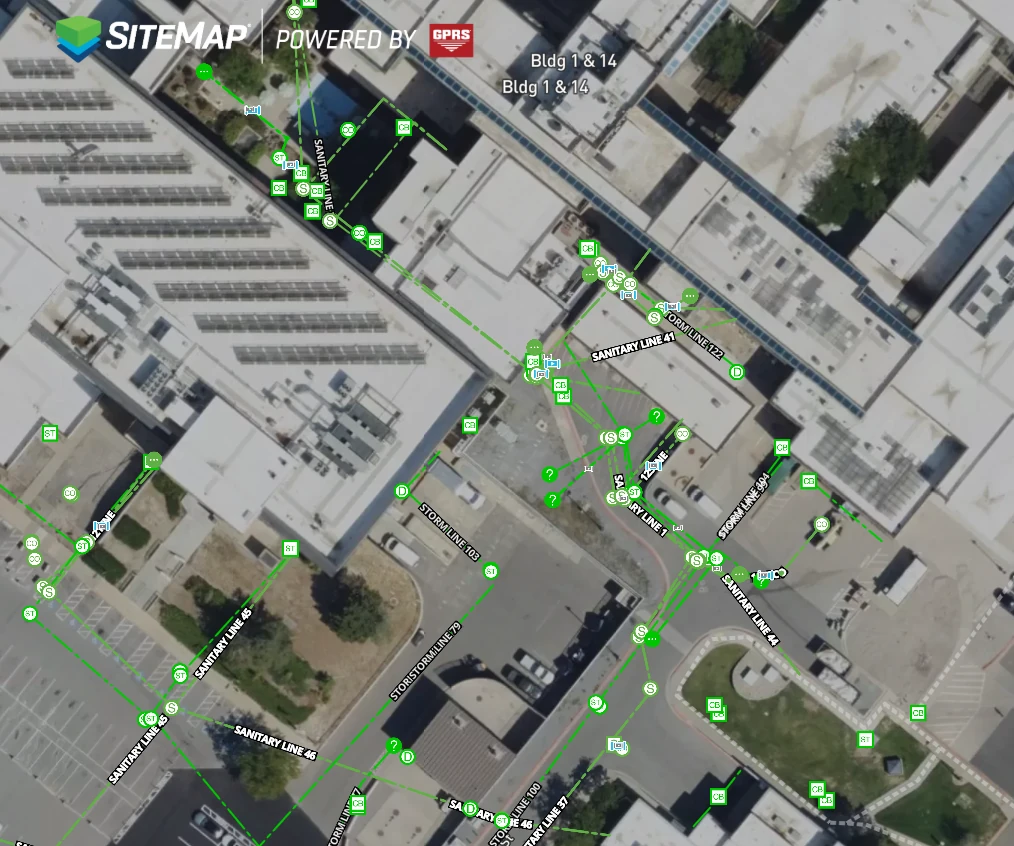
Water and sewer system mapping creates a clear record of pipe locations, conditions, and connections. GPRS combines CCTV inspections with utility locating to create accurate, layered maps, which are delivered through SiteMap for 24/7 access.
Annual sewer inspection programs
Annual Inspection Programs
Annual sewer inspection programs provide recurring evaluation of sanitary and storm sewer systems to document existing conditions and identify changes over time. As subsurface infrastructure ages and shifts, GPRS recommends conducting inspections every other year to ensure condition records remain current and to reduce long-term risk.
GPRS NASSCO sewer inspection report
NASSCO Reporting
A NASSCO sewer inspection report provides standardized condition data using PACP, LACP, and MACP coding, supported by GPRS’ Subsurface Investigation Methodology (SIM). GPRS delivers detailed reports through WinCan sewer inspection software, including video, images, and defect ratings, all accessible in SiteMap for informed decision-making.
GPRS Utility Locating Services
Utility Locating
Utility locating identifies underground utilities to prevent damage during excavation or drilling. GPRS maps public and private utilities, with verified 99.8% accuracy, many of which are not marked by 811, to improve safety and reduce risk.
GPRS Dye Tracing
Dye Tracing
Dye tracing identifies sewer connections, flow direction, and sources of illicit discharge in storm and sanitary systems. GPRS uses safe, biodegradable dye to confirm flow paths, detect unauthorized connections, and support environmental compliance.
GPRS Smoke Testing
Smoke Testing
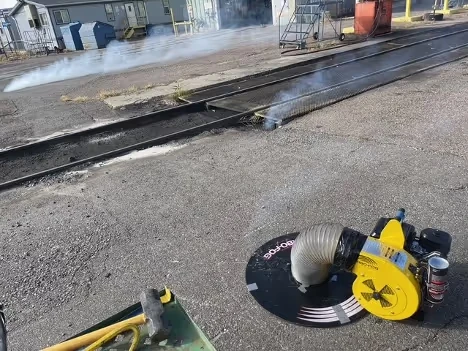
A smoke test quickly verifies sewer system connectivity by using non-toxic smoke to identify connected manholes, detect leaks or cross connections, and verify existing plans.
GPRS Inclination Reporting
Inclination Reporting
Inclination reporting measures sewer pipe slope and alignment to ensure proper flow. GPRS identifies sags and irregularities that can impact performance and compliance, especially in new installations.

///systems GPRS can inspect

We provide Inspection solutions for sanitary, storm, water, and industrial pipeline systems:
  • Sanitary sewer mains and laterals
  • Storm drain and stormwater systems
  • Potable water mains and service lines
  • Industrial and process drain systems
  • Campus and facility sewer networks
  • Large-diameter transmission mains
  • Cross bore detection on post-HDD pipelines

///when to schedule VPI services

Schedule a Video Pipe Inspection with GPRS if you are experiencing:
  • Recurring drain backups or slow drainage throughout a building
  • Unexplained wet spots, ground settlement, or sinkholes near known sewer lines
  • Foul odors inside or around the building
  • Before or after horizontal directional drilling (HDD) for cross bore detection
  • Pre-commissioning baseline inspection for new construction
  • Scheduled O&M inspection as part of a sewer & storm asset management program

///what you will receive

When you schedule a Video Pipe Inspection with GPRS, you will receive:
  • A full sewer line map that includes every pipe segment, manhole, and cleanout, flow direction, depths, and pipe material, when available
  • A WinCan interactive report that codes and grades every defect to NASSCO PACP, MACP, or LACP standards
  • Full-length video of the pipe interior
  • Photo documentation at each defect location
  • Defect location referenced to the nearest surface feature
  • PDF summary report with repair prioritization by defect severity

All GPRS sanitary and storm sewer VPI reports are delivered via SiteMap®, our industry-leading GIS and infrastructure management platform.

///pricing for vpi services
How Much Does Video Pipe Inspection Cost?

Residential sewer inspections typically range from $250–$1,200, and inspection equipment can cost $75,000–$100,000, but GPRS’ NASSCO-certified video pipe inspection is priced per project. Costs vary based on scope, site complexity, and the areas being inspected, including linear feet, pipes, laterals, cleanouts, and manholes. GPRS provides customized quotes based on your specific project requirements.

///SiteMap Sewer Layer: Sewer Mapping & Video Pipe Inspection

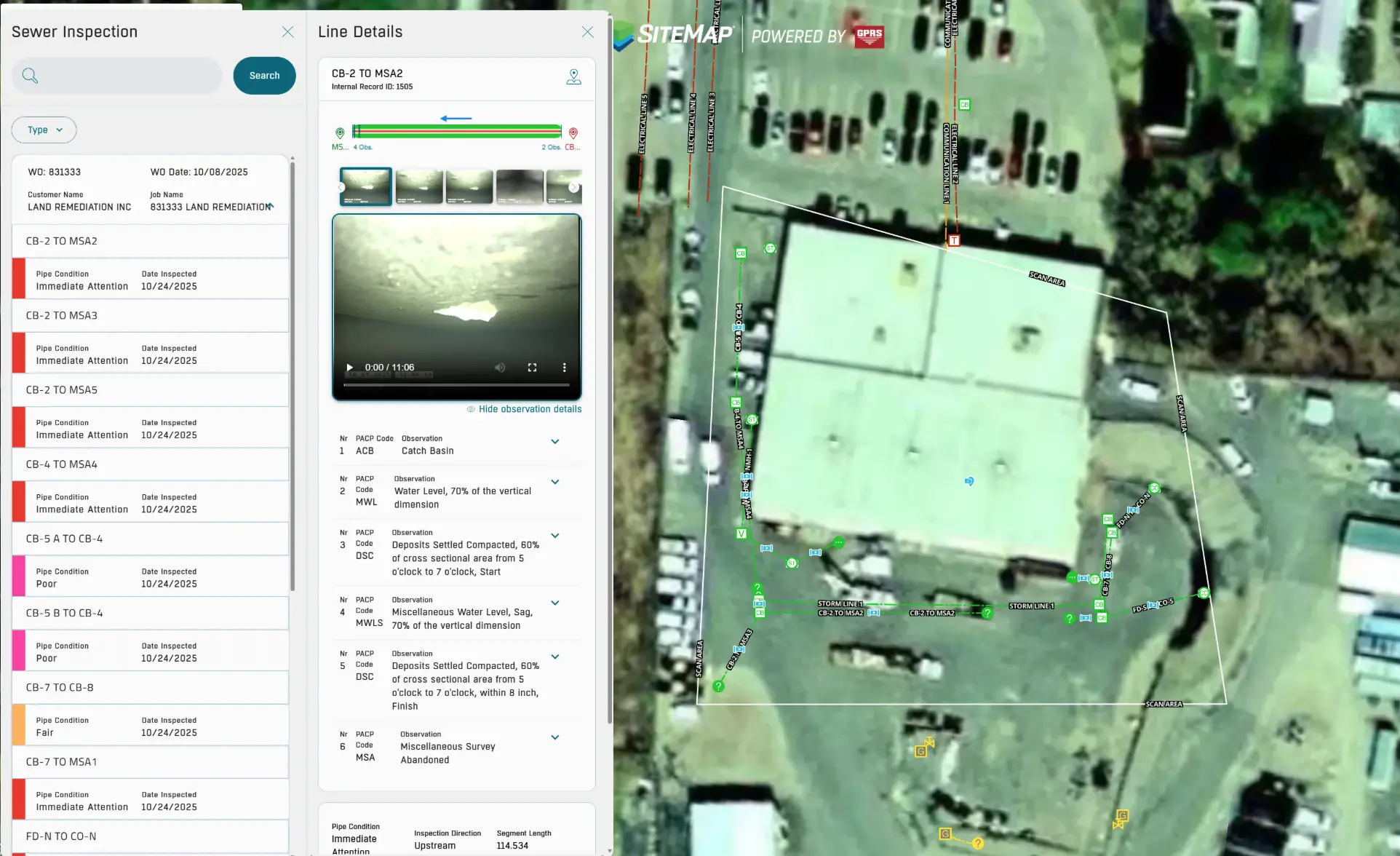
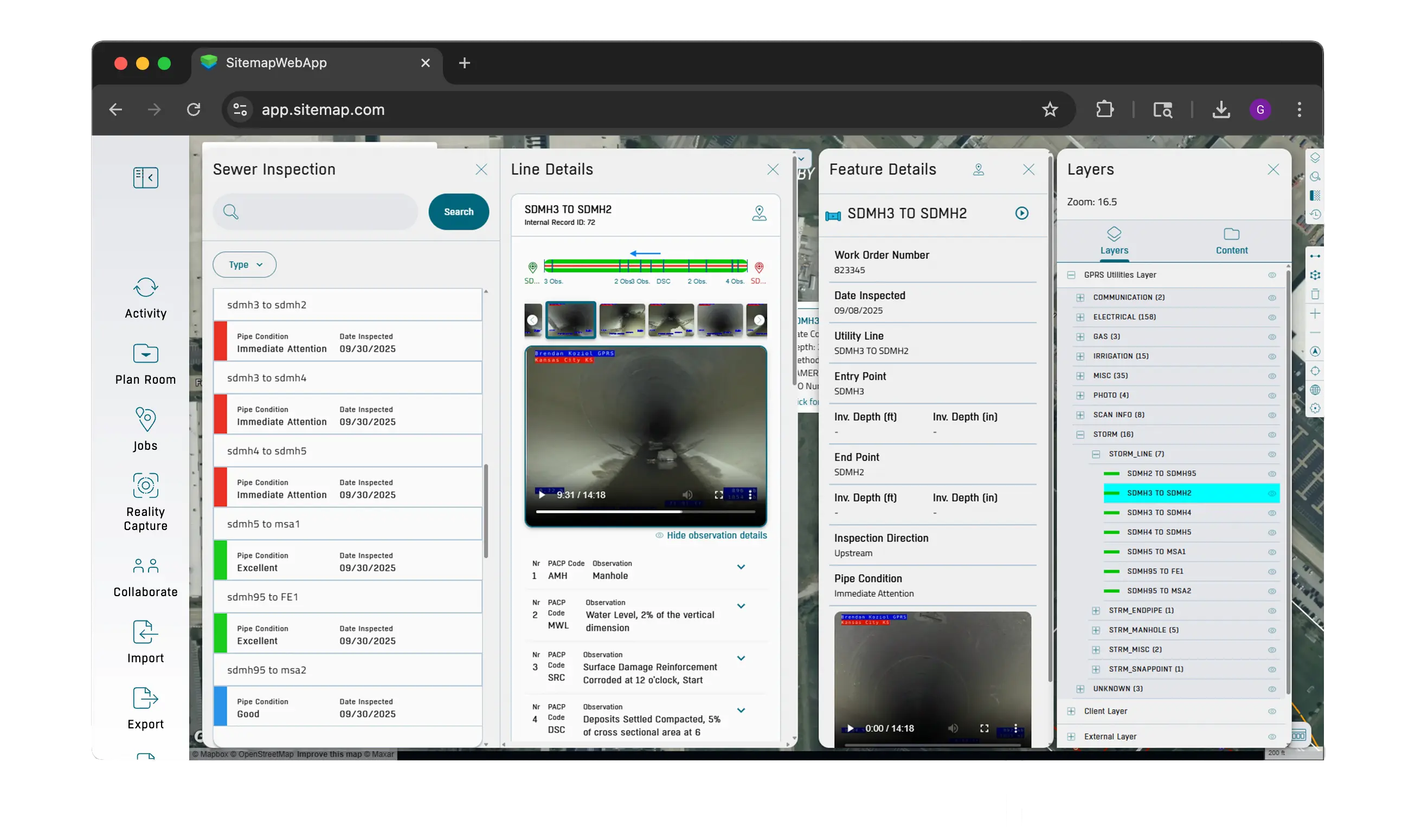
Visualize your sewer infrastructure with GPRS’ SiteMap Sewer Layer, combining video pipe inspection data, GIS mapping, and real‑time access to pipe conditions, flow direction, and defects.

Review accurately mapped storm and sanitary sewer assets, evaluate pipe conditions, confirm flow direction, depths, and locations, and securely share information with decision-makers and team members from a single source of truth.

Access your WinCan Web photo and video reports and your NASSCO PACP, LACP, and MACP-coded defect reports, so you can easily access, report, and share information, plan repairs, and maintain your sewer lines without excessive potholing.

Schedule SiteMap Demo
Benefits of SiteMap Sewer Layer

How Does The SiteMap Sewer Layer Help You?

You can plan maintenance, repairs, and upgrades to your wastewater and storm systems all in one secure, sharable platform.

Reduce potholing & destructive excavation
Prevent utility strikes & service interruptions
Detect damaging cross bores before they compromise your system
Visualize underground sewer networks for smarter planning
Sewer Layer in web browser

SiteMap’s Sewer Layer is Included When You Order a GPRS Video Pipe Inspection
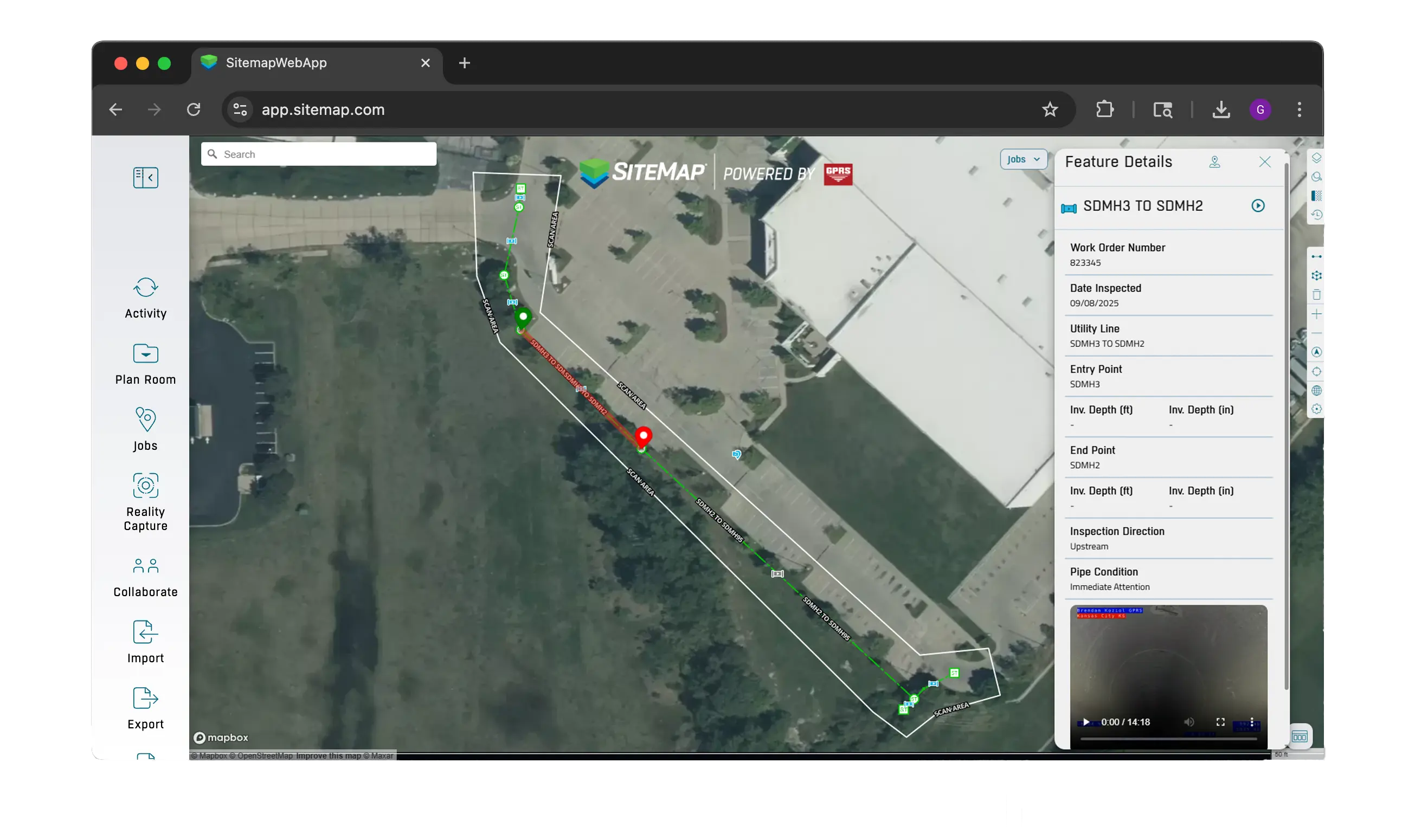
Mainline, lateral line, manhole & feature mapping
Highest-level geolocation accuracy: Real-Time Kinematic Positioning (RTK)
Integrated video & condition reporting in app
Sewer line in displayed in SiteMap
IN THE UNITED STATES, THERE ARE...
1,000,000
MILES OF POTABLE
WATER PIPING
800,000
MILES OF
PUBLIC SEWERS
500,000
MILES OF PRIVATE 
LATERAL SEWERS

GPRS INSPECTS THEM ALL.

///THE RIGHT TOOLS

Mainline Crawler used for CCTV inspections of sewer mainlines in GPRS video pipe inspection services.
Mainline Crawler
Mainline crawler inspections use CCTV cameras to inspect sanitary and storm sewer mainlines as part of GPRS’ Video Pipe Inspection Services. GPRS Project Managers deploy mainline crawlers to document pipe conditions, identify defects, and support NASSCO-certified reporting.
Small Diameter Crawler used for CCTV inspections of sewer mainlines in GPRS video pipe inspection services.
Small Diameter Crawler
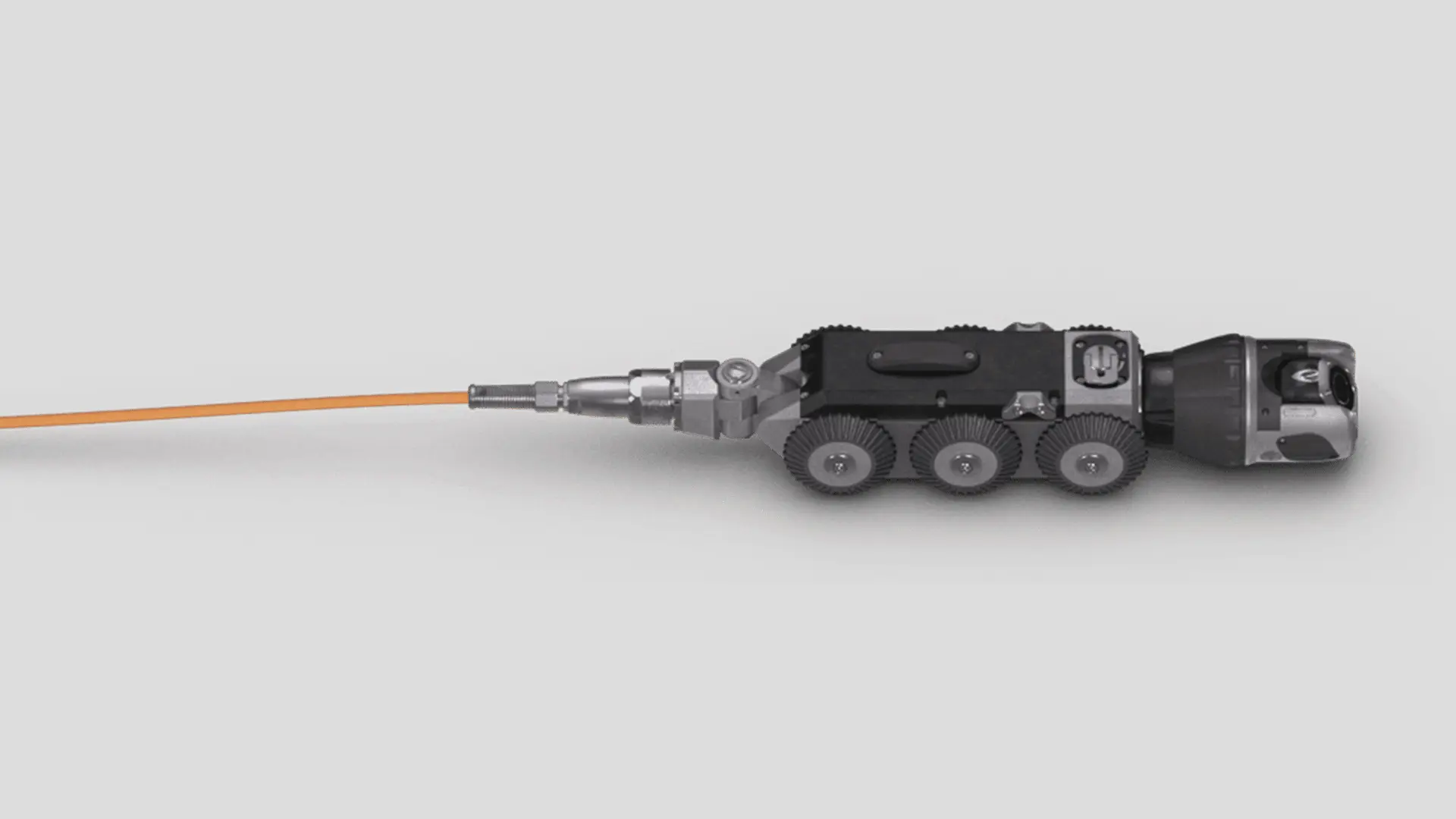
This small-diameter pipe crawler inspects branch lines and laterals as small as 4 inches, using a steerable six-wheel drive system to navigate obstacles and travel long distances while capturing accurate inspection data.
GPRS Lateral Launch Camera for Video Pipe Inspection
Lateral Launch Camera
Lateral launch inspections evaluate storm and sanitary sewer laterals extending from a mainline. GPRS deploys lateral launch cameras during video pipe inspections or full-site utility locates to inspect lateral pipes, document defects, identify cross bores, or abandoned lines, and support comprehensive sewer system mapping.
GPRS Push Camera for Video Pipe Inspection
Push Camera
A push camera, also known as a flexible rodder, is used to inspect smaller-diameter or hard-to-access pipes through entry points such as cleanouts, vents, or interior plumbing connections. GPRS uses push cameras to document lateral pipe conditions and locate non-metallic sewer lines. The camera’s built-in sonde can be detected with an EM locator, allowing pipe locations to be mapped as part of a utility locate or NASSCO-certified video pipe inspection report.
GPRS Automated Manhole Inspection Camera
Automated Manhole Inspection Camera
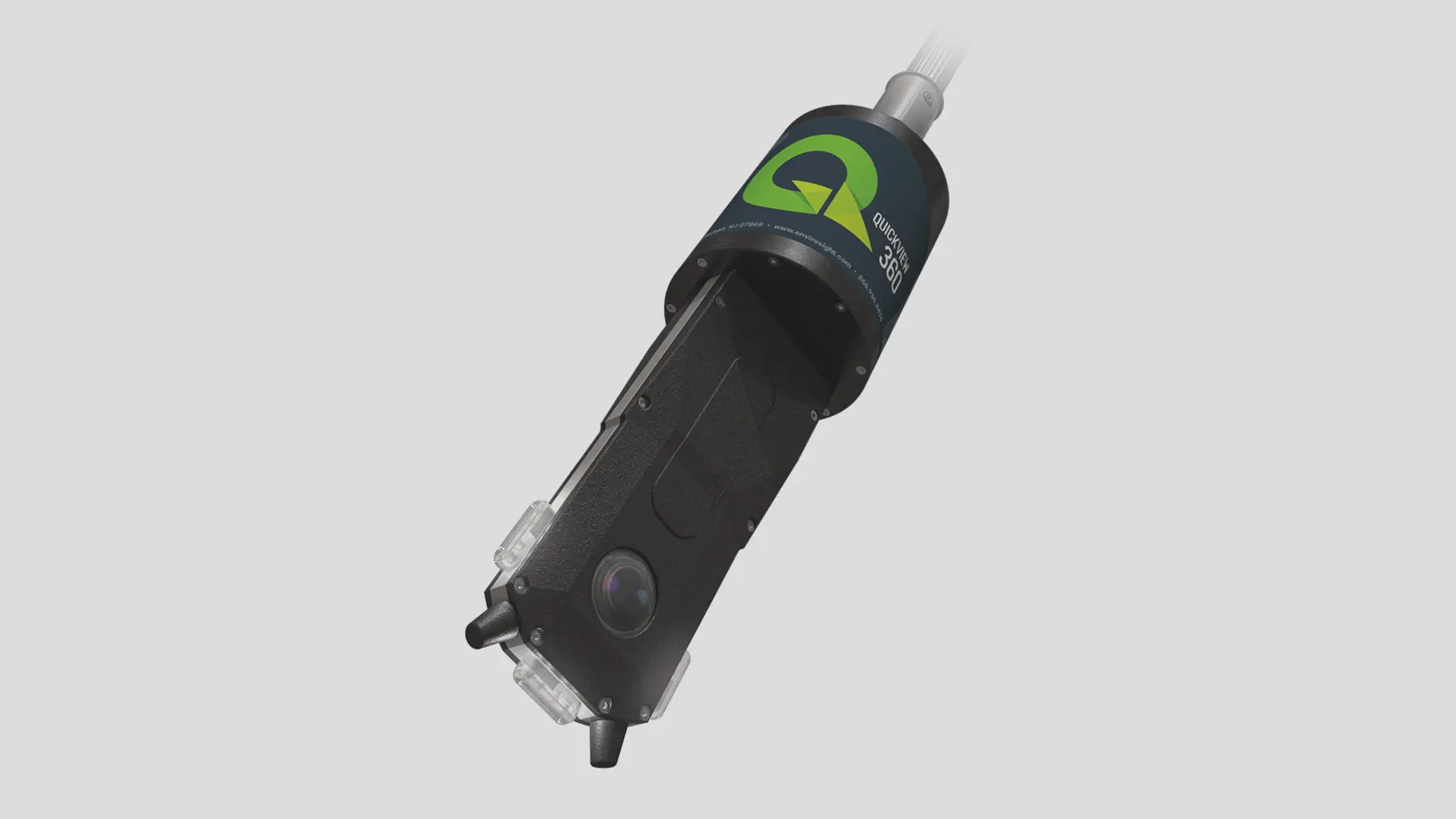
This automated manhole inspection camera delivers 360° video capture, AI-supported defect coding, and cloud-based reporting for fast, accurate sewer infrastructure assessments. It can complete a full manhole scan in about five minutes, generating high-resolution video, 3D models, and ready-to-use reports that streamline inspections and improve decision-making.
electromagnetic (EM) locator
EM Locator
An electromagnetic (EM) locator is a device used to detect conductive underground utilities by tracing active or passive electrical signals. GPRS utilizes EM locators as part of its Subsurface Investigation Methodology (SIM) to identify live power, radio signals, tracer wires, and accessible metallic pipes. EM locating is often performed in coordination with GPR and video pipe inspection services to improve underground utility mapping accuracy.
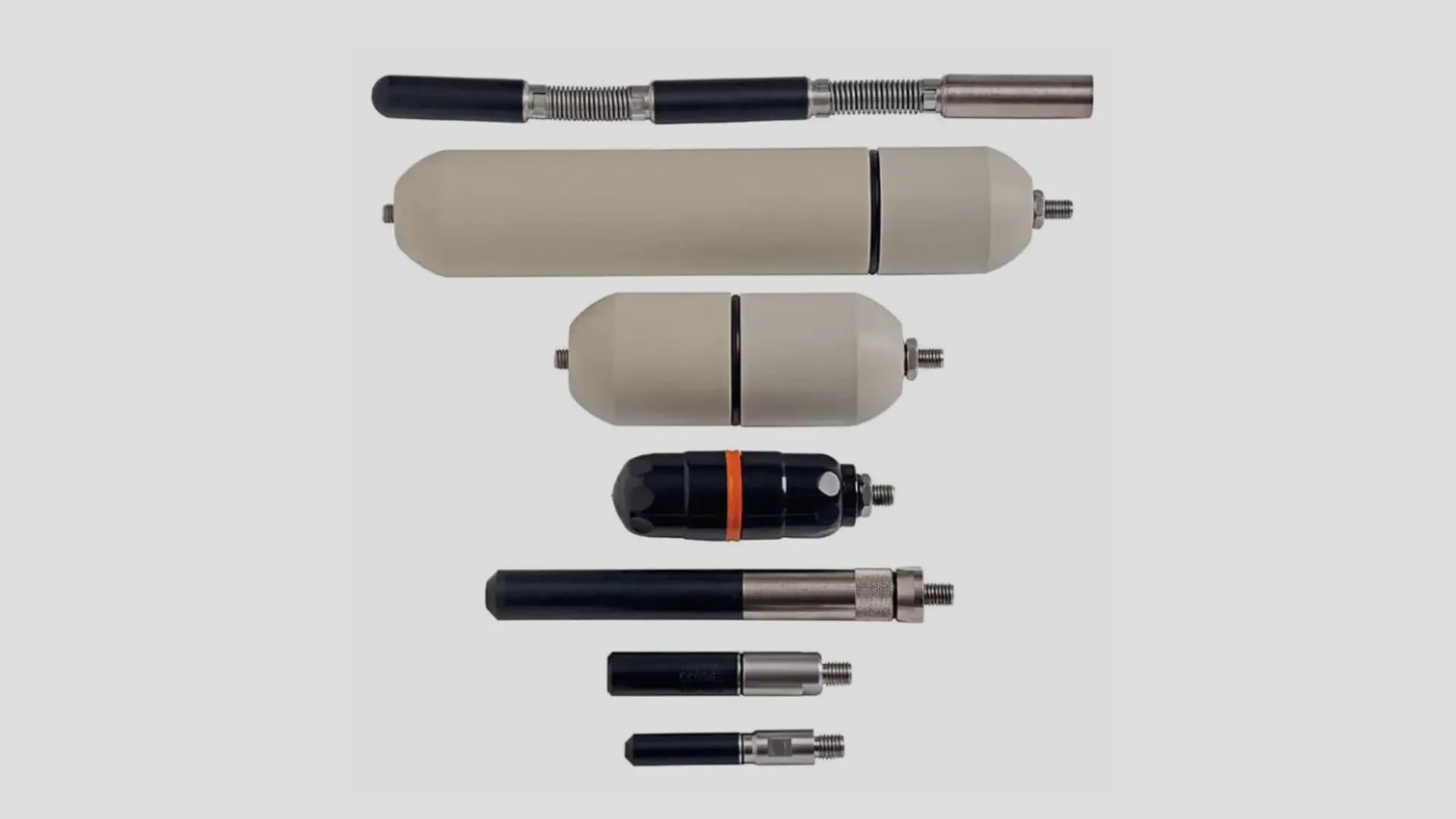
Different types of sondes, small radio-frequency transmitters for accurate mapping of pipes, displayed together.
Sonde and Super Sonde
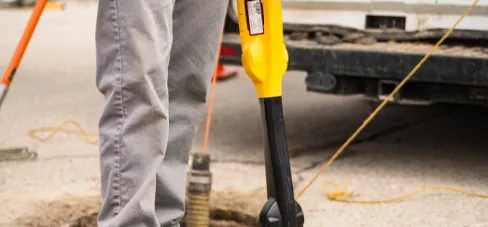
A sonde is a small radio-frequency transmitter that connects to the mainline crawler to help track underground pipes during inspections. GPRS uses a super sonde for video pipe inspection, a 10¼-inch, 8 kHz transmitter, that is locatable in nonmetallic pipes over 50 feet in depth, allowing Project Managers to trace sewer laterals and pinpoint pipe locations from the surface using an electromagnetic (EM) locator. This enables accurate mapping of pipe depth, alignment, and location, making it an essential tool for sewer inspection records.

///How GPRS supports your team

For Facilities Managers
Sewer issues can quickly become operational problems for healthcare, educational, commercial, and industrial facilities. GPRS helps position you for proactive, informed planning and wastewater asset management by putting your team on the same page with a single source of truth that holds all your GPRS-captured data, condition reporting, maps, and video.
For General Contractors
Inaccurate and out-of-date sewer documentation slows projects down, increases risk, and leaves you vulnerable to utility conflicts and strikes. GPRS helps you verify storm and sanitary sewer conditions, identify cross bores, and actually “see” buried sewer lines to reduce guesswork, unnecessary potholing, and keep your project on schedule.
for municipalities
Managing water, wastewater, and sewer systems is a major responsibility. Complete, up-to-date existing condition documentation helps you make more informed, efficient, and safe decisions. GPRS NASSCO-certified VPI reporting gives you control with a proactive approach to your sanitary and storm sewer infrastructure. You can plan maintenance and repairs, identify vulnerabilities, and help prevent service interruptions, seepage, and contamination.
For Industrial & High-Impact Sites
The specialized infrastructure, high-risk operations, and environmental and regulatory requirements in production, manufacturing, and/or extraction require precise, accurate, and reliable information. GPRS provides 99.8% accurate utility maps, and sanitary and storm sewer mapping, complete with flow direction, pipe material, entry and exit points, NASSCO PACP, LACP, and MACP-coded pipe conditions, and catalogued defects, sorted by severity, and a WinCan report with photo and video, all delivered via SiteMap to give you 24/7, 365 access to your sewer conditions.
FOR Cross Bore Detection & Pre/Post-Installation Support
Municipalities are increasing their due diligence to ensure underground utility lines remain intact when trenchless technology is used to install new utilities. This is especially true for storm and sanitary sewer lines, which when damaged, can contaminate soil and waterways, cause underground leaks and sinkholes, and impact public health. That’s why GPRS offers pre and post-installation support for horizontal directional drilling operations, nationwide.  See an example from our work in Fremont, California, here.

///Case Study

GPRS OFFERS COMPREHENSIVE NASSCO REPORTS WITH EVERY VIDEO PIPE INSPECTION
TASK:
Cross Bore Inspection After Fiber Installation
GPRS Pipe camera shot | GPRS
The Bottom Line:
GPRS found 10 sewer cross bores caused by trenchless fiber line installation.
Fremont CA cross bore | GPRSInner pipe image | GPRS
Chat box with question mark | GPRS
Problem
A large telecommunications firm was installing fiber in Fremont, California.

All contractors in the city are required to conduct closed-circuit television (CCTV) inspections of its sewer lines before and after completing any utility installation projects to mitigate the risk of cross bores.

The subcontractor employed by the client pulled out of the job before the post-installation inspections could be completed.
Magnifying glass with check | GPRS
Solution
We utilized our VPI services to inspect the city's sewer system for cross bores.


GPRS uses an arsenal of state-of-the-art video pipe inspection tools to visualize wastewater infrastructure, including lateral launch cameras, robotic CCTV crawlers, and push cameras.


We identifed ten cross bores within the city's system.
Notebook with checks | GPRS
Benefits
Safety: GPRS ensured that our client and the City of Fremont could make the necessary repairs to guarantee the safety of the community.

On Time: Our rapid response kept our client on schedule even after the original subcontractor pulled out of the job.

Reputation: We ensured that our client could complete the requirements set forth by the city. The cross bores were repaired immediately after they were located, so there were no service interruptions for residents.

///More GPRS VPI Project case studies

Pre & Post-Cross Bore Inspections
SiteMap Sewer Layer Visualizes Multiple Sewer Blockages for  New York Energy Company
The SiteMap Sewer Layer securely housed video evidence and detailed descriptions of each pipe blockage. With the information all in one place, the client could send it to the Department of Environmental Conservation, avoiding further delays and damages.
Read the Case Study
GPRS Video Pipe Annual Inspection Programs
GPRS Creates a Digital Map of All Sanitary & Storm Sewer Lines For Tulsa, Oklahoma Apartment Complex
GPRS provided an apartment complex with updated maps of all underground sewer and sanitary lines, along with a NASSCO-certified report on all blocked, defective, or obstructed pipes, so the client can effectively plan repairs & maintenance.
Read the Case Study

///INSPECTION PROGRAMS

Pre & Post-Cross Bore Inspections
Pre- and post-cross bore inspections evaluate sewer pipe locations and conditions before and after trenchless technology installation. These inspections help establish baseline conditions, verify safe installation, and identify cross bores or damage that may occur during trenchless work.
Video pipe inspection conducted before trenchless installation
Baseline sewer as-built documentation before applying trenchless technology
Post-installation inspection to confirm conditions and identify cross bores
Reduced risk of pipe damage, safety hazards, and long-term liability
GPRS Video Pipe Annual Inspection Programs
Annual Inspection Programs
Annual sewer inspection programs provide recurring evaluation of sanitary and storm sewer systems to document existing conditions and identify changes over time. As subsurface infrastructure ages and shifts, GPRS recommends conducting inspections every other year to ensure condition records remain current and to reduce long-term risk.
Video pipe inspection of sanitary or storm sewer systems
Early identification of breaks, cross bores, and defects
Reduced risk of service interruptions, contamination, and damage
Pipe defects ranked by severity in a WinCan interactive, NASSCO-certified report
Recommended inspection frequency for large facilities, campuses, and municipalities
A full site scan is incomplete without VPI
A video pipe inspection (VPI) enhances a full site utility locate by providing direct visibility into underground sewer infrastructure that surface locating alone cannot capture. By combining VPI with utility locating services, GPRS delivers a more complete and accurate understanding of subsurface conditions.
Sewer laterals and mainlines identified and mapped
Manholes and cleanouts documented, including previously unmarked features
Cross bores and pipe defects identified through visual inspection
When video pipe inspection is included as part of a private utility locate, project teams receive a comprehensive, reliable map of their entire subsurface infrastructure to support safer planning and construction decisions.
///Sewer Mapping & Modeling in 3D
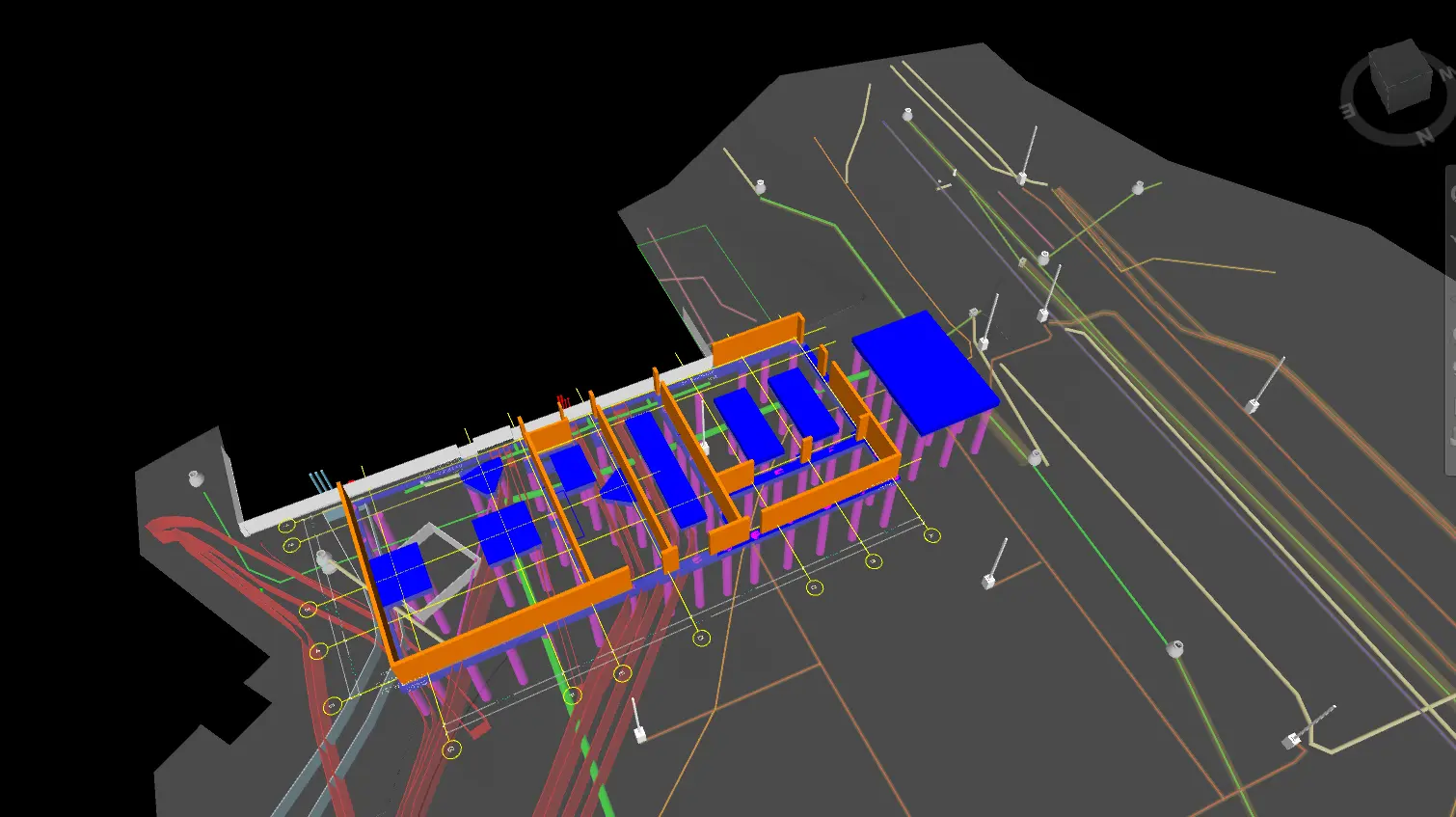
See your sanitary and storm sewer lines, clean-outs, and manholes in 3D from any device!
GPRS’ Video Pipe Inspection data can be used to create accurate subsurface 3D BIM models, including flow direction, cross bores, and more so that you can see your wastewater infrastructure in the palm of your hand any time via SiteMap.
Utility Locating Sewer Mapping

///NASSCO Education and Training

NASSCO is the National Association of Sewer Service Companies. NASCO sets industry standards for assessing, maintaining, and rehabilitating underground water and sewer infrastructure. All GPRS Project Managers are NASSCO trained and certified, and provide NASSCO Video Pipe Inspection Reports via WinCan for our customers, delivered via SiteMap for secure, accessible documentation that’s available 24/7.

NASSCO-Certified. Trusted Nationwide.

GPRS VPI Project Managers are experts in NASSCO inspection and classification standards. Every VPI deliverable is coded and graded to NASSCO PACP (Pipeline Assessment Certification Program), MACP (Manhole Assessment Certification Program), or LACP (Lateral Assessment Certification Program) standards, the format accepted by municipalities, engineers, and public works departments nationwide. PACP grades mainline pipe defects. MACP grades manhole structure. LACP covers lateral service lines. GPRS delivers the applicable report for every inspection performed.

ALL GPRS PROJECT MANAGERS COMPLETE THE FOLLOWING CERTIFICATIONS:
Lateral Assessment Verification | GPRS
Pipeline Assessment & Certification Program (PACP)
The Pipeline Assessment and Certification Program (PACP) is an international standard that has been used for many years as the assessment of pipelines, manholes, and laterals.
Pipeline assessment | GPRS
Lateral Assessment (LACP)
The NASSCO program for defect coding in lateral pipes. This program is the Lateral Assessment and Certification Program (LACP). This training addresses many fittings and access points that are unique to laterals.
Manhole Assessment logo | GPRS
Manhole Assessment (MACP)
The Manhole Assessment and Certification Program (MACP) provides training on the gathering of detailed information to fully document all defects, determine condition of the manhole, and provide the specific information needed to recommend corrective action

///GPRS VIDEO PIPE INSPECTION MAPS, MODELS & REPORTS:

Written NASSCO Reports
GPRS is proud to offer WinCan reporting to our Video Pipe Inspection clients. Maintaining sewers starts with understanding sewer condition, and WinCan allows GPRS Project Managers to collect detailed, NASSCO compliant inspection data.
VPI Report | GPRSVPI Report | GPRS

///GPRS VIDEO PIPE INSPECTION MAPS, MODELS & REPORTS
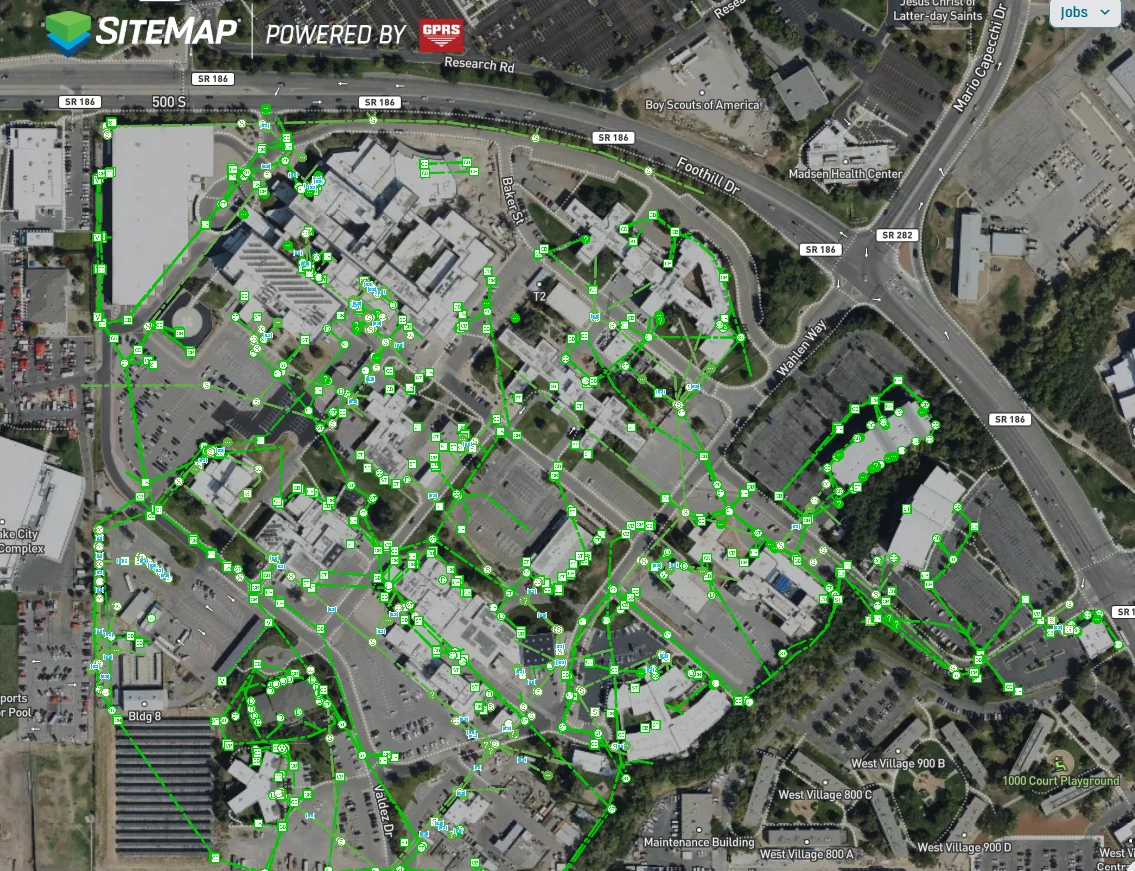
Detailed Maps & Locations
GPRS Project Managers not only inspect the interior condition of water pipes, sewer pipes, sewer laterals, and manholes – they can provide a map of their location. The GPRS Mapping & Modeling Team can provide detailed GPS overlays and CAD files.
NASSCO Map | GPRSNASSCO Map | GPRS
NASSCO image | GPRSNASSCO image | GPRSNASSCO image | GPRSNASSCO image | GPRSNASSCO image | GPRSNASSCO image | GPRSNASSCO image | GPRSNASSCO image | GPRSNASSCO image | GPRSNASSCO image | GPRSNASSCO image | GPRSNASSCO image | GPRS

WATER & SEWER DAMAGE AWARENESS WEEK

Plan - Prevent - Protect | GPRS

From Reactive to Proactive: safe, clean, and profitable Water and sewer systems

Water and sewer damage awareness week | GPRS

ANNUAL SAFETY WEEK THAT FOCUSES ON:

Why our infrastructure is more vulnerable to damage today than ever before.
Keep non-revenue water loss from hurting your community – and your bottom line.
The risks to your systems’ equipment posed by improper/infrequent maintenance.
Learn how to mitigate the risks of cross bores – permanently.
How routine water loss surveys, and proactive water, sewer, and stormwater system maintenance plans eliminate service interruptions and maintain your entity’s reputation.
Create a plan to keep your water, sewer & storm systems running at peak efficiency.

///FREQUENTLY ASKED QUESTIONs

What is a video pipe inspection?

Video pipe inspection (VPI) is the use of a CCTV camera, mounted on a robotic crawler or lateral launch system, to inspect the interior condition of sewer, storm drain, and process piping without excavation. The camera travels the full length of the pipe, transmitting live footage that a NASSCO-trained technician reviews to document defects, assess pipe condition, and identify cross bores, cracks, root intrusion, offset joints, and structural damage. GPRS delivers our findings and digital sewer maps via SiteMap. They include a comprehensive digital sewer map, and a WinCan interactive report with every defect coded, graded, and located.

How does CCTV pipe inspection work?

A GPRS Project Manager inserts a robotic crawler or lateral launch camera at an access point, typically a manhole or cleanout. The camera travels the pipe while transmitting live video footage. The VPI Project Manager catalogues, codes, and grades every defect observed using PACP, MACP, or LACP standards. Findings are compiled into a WinCan interactive report and a digital sewer map and delivered via SiteMap.

What does a GPRS video pipe inspection report include?

Every GPRS VPI report includes a WinCan interactive report

  • Each defect coded and graded to NASSCO PACP, MACP, or LACP standards
  • Defect locations referenced to the nearest surface feature
  • Full-length video of the pipe interior
  • Photo documentation at each defect location
  • A PDF summary report with repair prioritization by defect severity
  • A comprehensive digital sewer map and access to all inspection data 24/7 via SiteMap

Click here to learn more about how to see your sewers with SiteMap.

What is NASSCO PACP and why does it matter for pipe inspection?

NASSCO (National Association of Sewer Service Companies) developed the Pipeline Assessment Certification Program (PACP) - the standardized coding and grading system for sewer pipe defects used by municipalities, engineers, facility managers, and public works departments nationwide. GPRS VPI Project Managers are NASSCO-trained and all VPI deliverables are coded and graded to NASSCO PACP standards, making reports compatible with municipal procurement requirements and asset management systems.

Click here to learn more about NASSCO defect reporting.

What is the difference between PACP and MACP pipe inspection ratings?

The PACP (Pipeline Assessment Certification Program) is the grading system for defects in sewer mainlines. The MACP (Manhole Assessment Certification Program) covers structural defects in manholes. The LACP (Lateral Assessment Certification Program) applies to lateral (service) lines. GPRS delivers full VPI reports coded to the appropriate standard required for the infrastructure inspected.

What types of pipes and systems can GPRS inspect?

GPRS inspects sanitary sewer mains and laterals, storm drain and stormwater systems, potable water mains, industrial and process drain lines, campus and facility sewer networks, large-diameter transmission mains, and post-HDD pipelines for cross bore detection.

What are the signs that a sewer line needs video inspection?

Recurring drain backups or slow drainage throughout a building, unexplained wet spots or ground settlement near known sewer lines, foul odors inside or around the building, any horizontal directional drilling near existing sewer lines requiring cross bore detection, pre-commissioning baseline inspection for new construction, or scheduled O&M inspection as part of a sewer asset management program.

What is the difference between sewer inspection and sewer cleaning?

Sewer cleaning, utilizing services like jetting or hydro excavation, removes debris, root intrusion, grease, and blockages from inside the pipe, but it does not assess condition. Sewer inspections use CCTV cameras to document pipe interiors and grade defects per NASSCO standards. Inspection is typically performed before cleaning to establish a baseline, and after cleaning to confirm results. GPRS provides comprehensive video pipe inspection services, and can help you subcontract cleaning is performed by a separate contractor if needed.

How do I get a pipe inspection report that meets municipal requirements?

GPRS delivers WinCan reports coded to NASSCO PACP, MACP, and LACP standards – the format accepted by municipalities, public works departments, and engineering firms nationwide. Reports include defect coding, condition grading, location referencing to surface features, and full HD video documentation. Plus, GPRS goes a step beyond by providing a comprehensive digital sewer map that shows customers the exact location, flow direction, and depth of their sewer systems.

Click here to discuss and confirm GPRS report format requirements for your specific municipality or contract.

Can GPRS perform video pipe inspection for cross bore detection after HDD?

Yes. GPRS offers full pre and post-cross bore inspections. After a horizontal directional drilling installation and before sewer cleaning operations begin, GPRS inspects the existing sewer and drain lines at all crossing points to detect and document any intersections between the new utility and existing pipes. This prevents the potentially fatal pipe rupture that can occur when a gas line cross bore is struck during high-pressure sewer jetting.

Click here to schedule a cross bore inspection.

What does SiteMap Sewer Layer include?

SiteMap Sewer Layer includes geolocated sewer inspection data that helps customers visualize pipe segments, laterals, and related wastewater assets together with their PACP, LACP, and MACP condition information. Depending on the inspection scope, that can include flow direction, pipe depth, pipe material, entry and exit points, all discovered pipe defects, cross bores, NASSCO-coded condition data, photos, and in-app video for each inspected segment.

We build our VPI deliverables from CCTV inspection and locating data, and provide it as a secure, shareable digital record your team can use for maintenance planning, operations and maintenance, and capital decision-making.

Learn how we helped the City of St. Louis, Missouri tie a private sewer system into their public sewer infrastructure with our digital deliverables, here.