
.svg)

.svg)


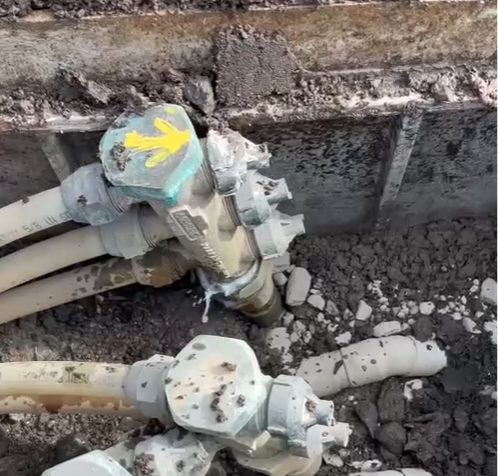
Project Manager Note: "We could hear it, water and gas escaping at the same time. By the sound alone I could tell the pipe was inside something plastic. We dug a little circle in the dirt, opened the box, and there it was. The lid was crushed right down onto the manifold. They fixed it with a pair of pliers while we were still on site."
William Walhovd
GPRS Project Manager

Highlights
THE BOTTOM LINE
A multi-method leak detection approach combining pipe locating, thermal imaging, acoustic listening, and trace gas detection identified the failure point in a pressurized snow melt loop at a major California ski resort, allowing the client to make repairs on-site before a forecasted storm arrived.
Industry
Hospitality / Ski Resort
Service
Leak Detection, Pipe Locating & Thermal Imaging
Location
Olympic Valley (Palisades Tahoe), California
GPRS Project Manager Insight
Deliverables
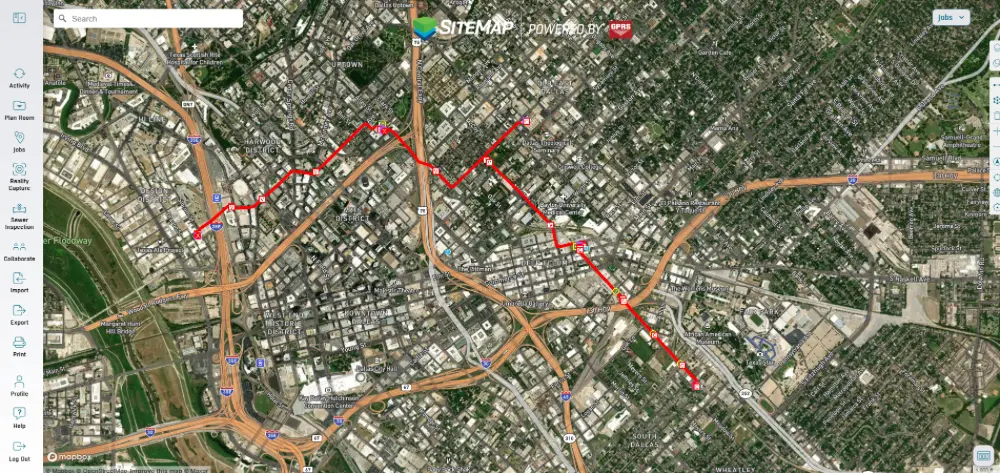
Field Markings, SiteMap®, Job Services Report
PROJECT APPLICATION
Snow Melt / Radiant Heating Loop Leak Detection
ASK
overview
Locate the source of a confirmed pressure loss in an underground snow melt loop serving an outdoor staircase at Palisades Tahoe ski resort, prior to the arrival of a major winter storm.
Challenge
- Resort staff identified low glycol levels and confirmed pressure loss in the snow melt system, indicating a subsurface leak with an unknown location.
- The system needed to remain operational ahead of an incoming storm, creating urgency to locate and repair the leak before freezing conditions set in
- The loop ran beneath heavily trafficked outdoor stairs, complicating access and increasing risk to guests.
- A material transition in the piping and an unknown buried access box made traditional locating methods and failure detection more difficult.
- Resort staff noticed that glycol levels in the snow melt system were low, a telltale sign of a subsurface leak
Solution
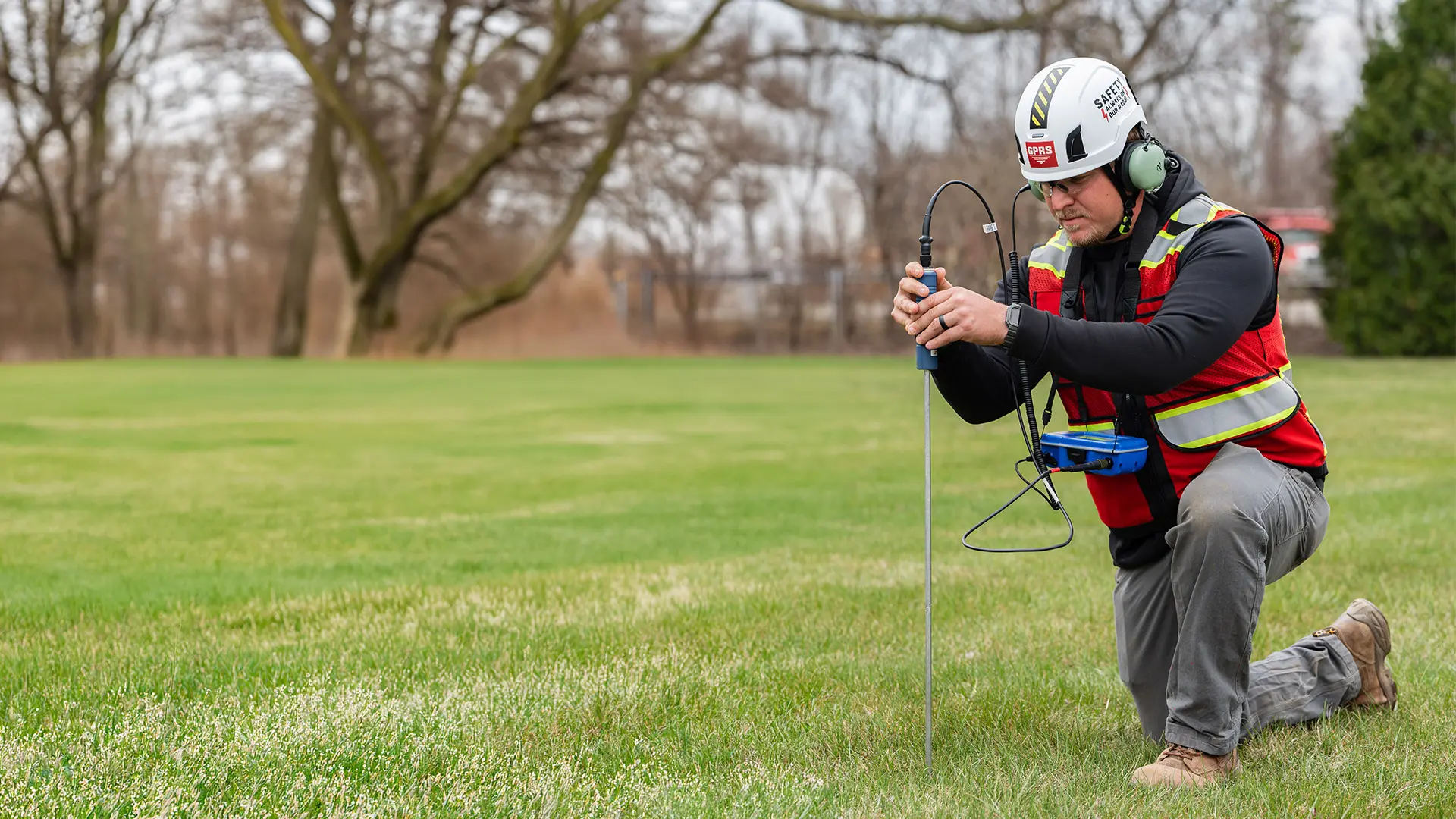
- The Project Manager traced the system electromagnetically from the boiler until the signal was lost at the material transition point.
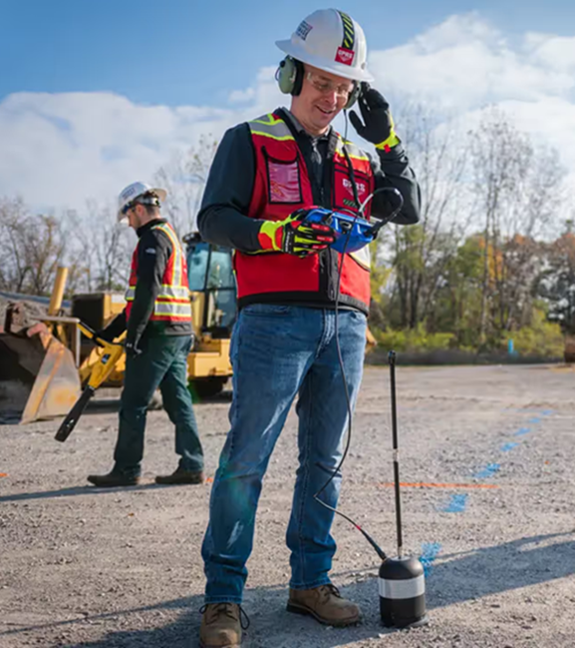
- Thermal imaging and acoustic listening were used to identify heat anomalies and leak sounds, but neither method revealed the failure.
- A trace gas (5% hydrogen / 95% nitrogen) was introduced into the drained system, allowing detection of escaping gas at the surface.
- Gas readings and acoustic confirmation pinpointed the leak, leading to excavation of a crushed, previously unknown valve box where the failure occurred.
Outcome
- The leak was located and repaired the same day, preventing system failure and avoiding frozen pipes ahead of the storm.
- A methodical, multi-step diagnostic approach ensured efficient problem-solving and minimized unnecessary excavation.
- Trace gas detection proved highly effective where other methods failed, reinforcing its value for similar subsurface systems.
- Discovery and documentation of previously unknown infrastructure provided the client with improved visibility for future maintenance and planning.
CASE STUDY GALLERY


No items found.




.avif)