.svg)

.svg)

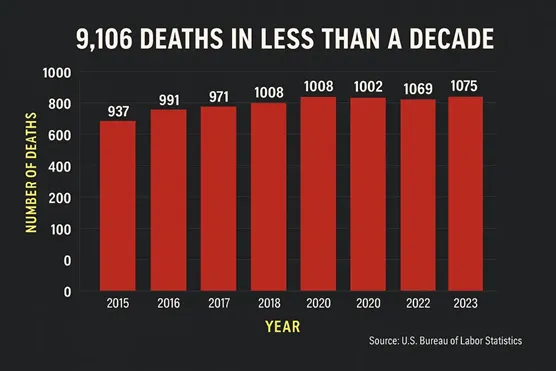
The U.S. Bureau of Labor Statistics reports that over 1,000 construction workers die each year from serious work-related injuries. In 2023, 1,075 workers were killed on the job, and the number has continuously increased each year since 2015.
By understanding the hazards of every job site and creating a personal safety plan, you can keep yourself and your team safe.
A great place to start is with what causes and how to counteract OSHA’s Fatal Four.
OSHA’s Fatal Four
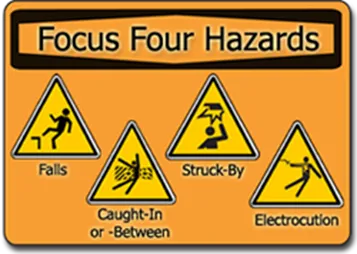
OSHA’s Fatal Four, also known as the Focus Four, are the most common causes of serious injuries and fatalities among construction workers.
The Fatal Four* are:
- Falls
- Struck-By Incidents
- Caught-In or Caught-Between
- Electrocutions
*OSHA also considers the dangers of Respirable Crystalline Silica (RSC) and Silicosis, the illness it causes, as a bonus fatality risk, although they’ve yet to add it to create a “fatal five.”
Falls
Falls are the number one cause of death in construction. In 2023, falls caused 421 deaths among construction workers.
The main causes of falls on construction sites are:
- Unprotected sides, edges, and holes
- Improperly constructed walking/working surfaces
- Improper use of scaffolding, ladders, or powered lifts
- Failure to properly use fall arrest systems
- Slips and trips
Fall protection is required by OSHA on all jobs working at a height of six feet or more, or whenever someone is working over dangerous equipment. Examples of OSHA fall protection include the use of guardrails, safety nets, and personal fall arrest systems (PFAS).
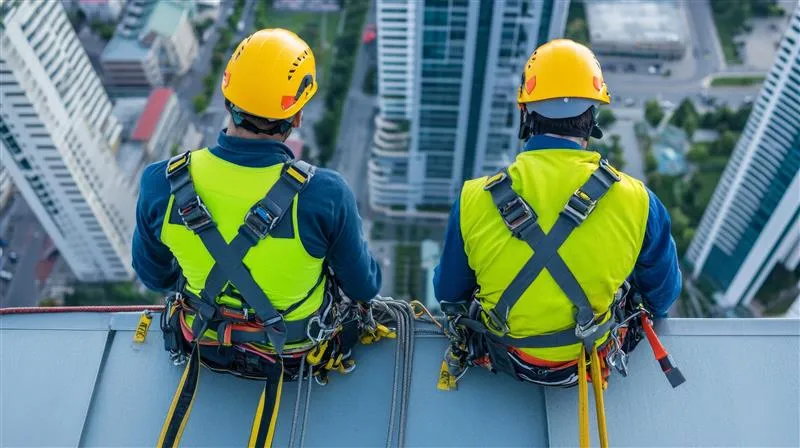
The proper use of ladders and scaffolding is also vital in preventing falls. To prevent falls from improper scaffolding or ladder use, inspect them for stability and OSHA compliance. Also, always place them on level and stable ground.
OSHA estimates that the fall protection requirements and rules in place will prevent 29 worker deaths and 5,842 workday injuries each year.
Struck-By Incidents
Struck-by incidents occur when a worker comes into forcible contact with a moving object. These instances are the second leading cause of death and the leading cause of non-fatal injuries among construction workers. In 2020, struck-by incidents caused 150 deaths and over 14,000 non-fatal injuries, according to the Center for Construction Research and Training (CPWR).
The four types of struck-by incidents are:
- Struck by falling objects -– tools or other debris striking workers when they are knocked off unprotected edges or dropped from large heights
- Struck by flying objects – accidental nail gun discharges, debris from a saw, or other tool malfunctions hitting workers
- Struck by swinging objects – swinging crane loads, excavators, or other materials acting as a swinging pendulum entering a worker’s path
- Struck by rolling objects – runaway vehicles and unsecured materials, like barrels, beams, or pipes, rolling over a worker’s foot or body
Wearing personal protective equipment (PPE), like hard hats, safety glasses, and high-visibility vests, protect workers every day. It keeps them safe from many hazards, including struck-by incidents. Because of this, the use of PPE is mandatory on all construction sites.
Another way to protect yourself from struck-by incidents is to never position yourself between moving and stationary objects. A moving object can include a forklift or a crane while a stationary object could be a wall or a parked vehicle. The area between these objects is known as a “pinch point.” Whatever is in this zone is at risk of being severely pinned or crushed, so it’s important to always be aware of your surroundings and avoid being within these pinch points.
Caught-in or Caught-Between
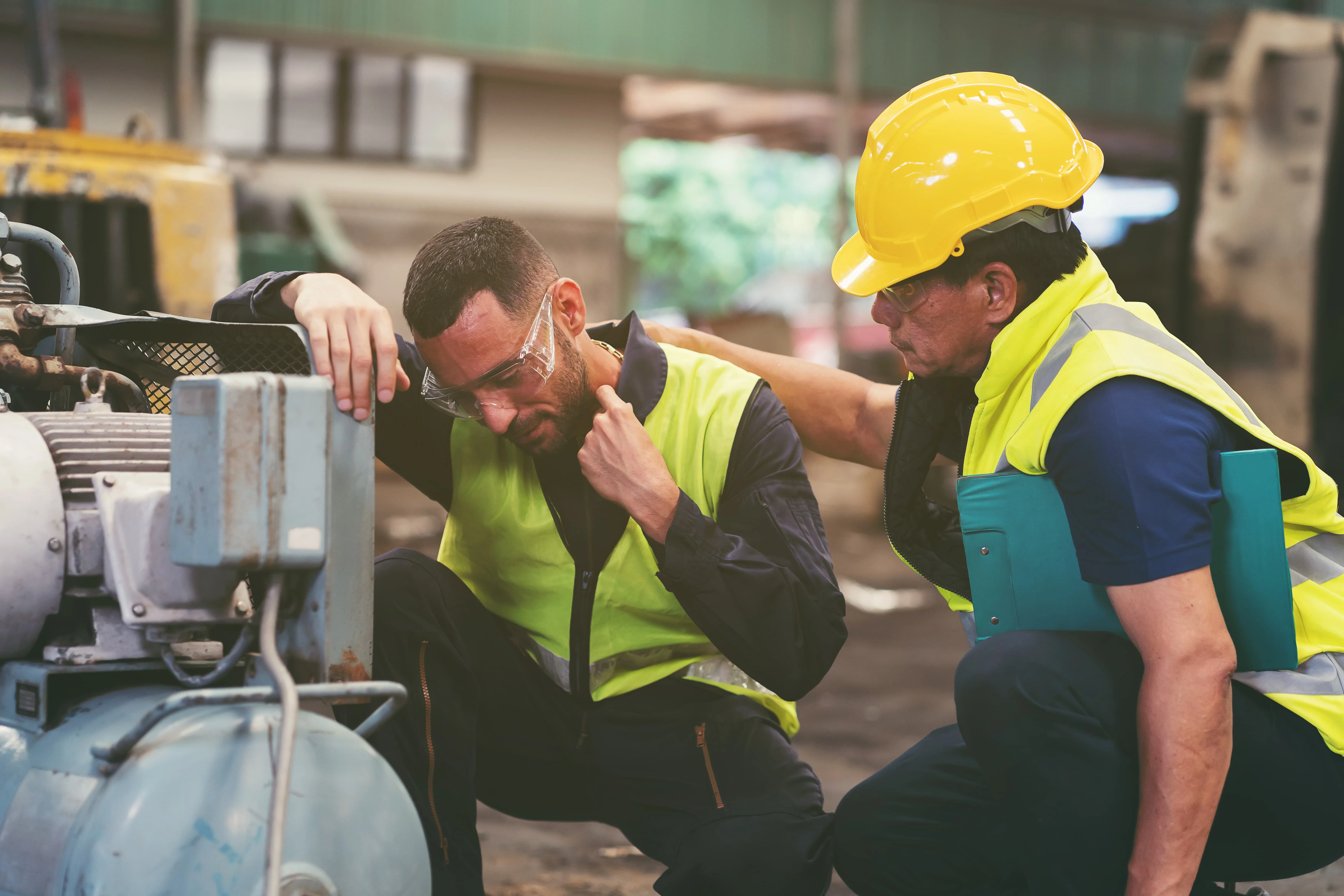
Caught-in or caught-between accidents cause around 140 construction worker deaths each year. These incidents occur when a worker is stuck or crushed by materials, equipment, or a collapsing structure. Examples of this could include trench cave-ins, getting caught by moving machinery, or getting trapped under walls and other debris during demolitions.
Caught-in or between accidents are similar to struck-by incidents. The main difference is that caught-in or between accidents cause injuries through crushing forces, while struck-by incidents result from the impact alone.
As mentioned previously, it is important to be aware of the pinch points on your job site. Caught-in or between accidents are likely to occur, along with struck-by incidents, in these areas.
Other ways to stay safe around caught-in or caught-between hazards are:
- Confirming safety guards are in place and working before operating machinery
- Making sure equipment and vehicles are properly secured and will not move unexpectedly
- Ensuring any trenches or excavations deeper than five feet are properly sloped or shored and have the proper protective systems in place before entering
- Avoiding loose-fitting clothing
Electrocutions
The Centers for Disease Control (CDC) states that electrical hazards cause more than 300 job-related deaths each year, with 44% of them (around 130) occurring in the construction industry.
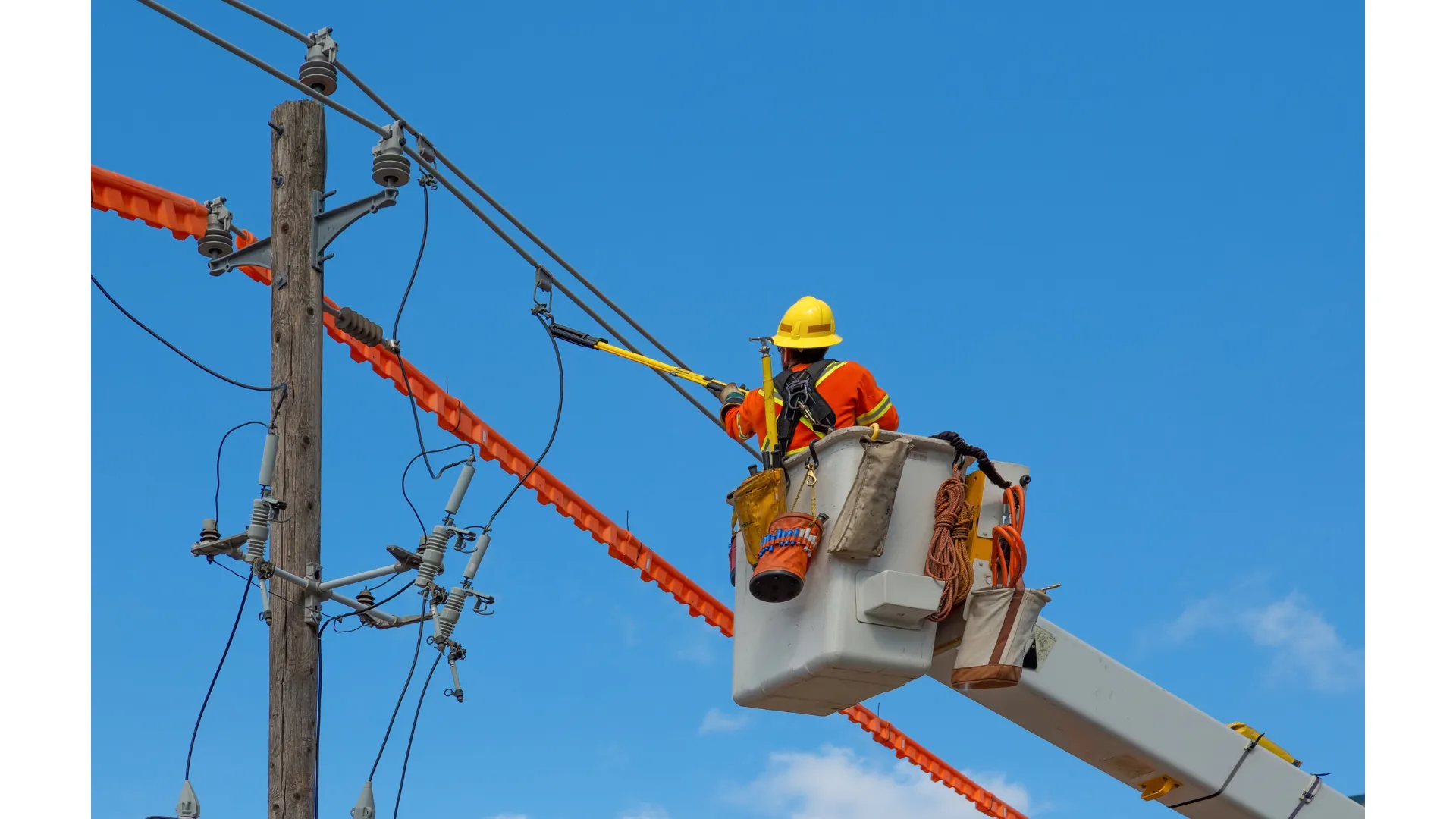
Some causes of electrocution deaths in construction include:
- Contact with overhead or buried power lines
- Contact with live circuits
- Improper grounding of equipment or circuits
- Defective or damaged equipment
One way to prevent electrocution and other electrical injuries on site is by locating all utilities within the area before digging or working in the area. It’s best to hire utility location professionals, like SIM-certified GPRS Project Managers, to accurately locate any buried power lines and keep your team safe.
Other ways to prevent electrocution deaths on construction sites are:
- Making sure all electrical tools and systems are properly grounded
- De-energize or insulate overhead power lines and other electrical equipment
- Use ground fault circuit interrupters (GFCIs) on all circuits, especially in wet conditions
- Utilize insulated tools and gloves when working near electricity
Fifth Hazard: Respirable Crystalline Silica
Some include a fifth potentially fatal item when listing the main risks construction workers face daily: respirable crystalline silica (RCS).
Crystalline silica is a common mineral that can be found in sand, stone, and concrete. Cutting, sawing, or drilling into concrete and other materials containing crystalline silica creates silica dust, also known as respirable crystalline silica (RCS). Silica dust is very small – about 100 times smaller than ordinary sand – and over two million people in the U.S. are exposed to it every year.
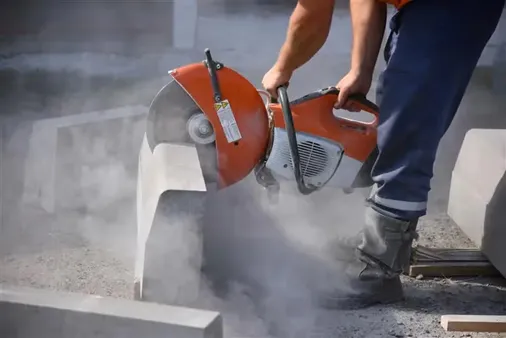
Construction workers are constantly exposed to silica dust and are at risk of developing silica-related illnesses. Some of these serious illnesses or diseases include:
- Silicosis
- Lung cancer
- Chronic obstructive pulmonary disease (COPD)
Currently, lung cancer is treatable if caught early, but Silicosis and COPD are incurable. It’s important to take precautions to avoid silica dust exposure. The use of ventilation systems and water sprays are some of the best ways to keep your team safe from the extreme health effects.
Concrete Sawing & Drilling Safety Week
Every year during the last week of January, GPRS offers FREE concrete safety presentations for Concrete Sawing & Drilling Safety Week.
During these presentations, our concrete professionals bring their many years of experience and expertise to help you put together a personal safety plan that will help your team dig safely this year and beyond.
FREQUENTLY ASKED QUESTIONS
How does GPRS contribute to jobsite safety in construction?
GPRS’ #1 focus is safety and part of our mission is the pursuit of 100% subsurface damage prevention because sending your team home safe and sound every day is the most important job we can help you do.
Our Subsurface Investigation Methodology (SIM) provides the gold standard in underground utility locating and concrete scanning, so we can help you ensure your team is clear to cut, core, or drill with confidence. Our Video Pipe Inspection services provide NASSCO-compliant PACP-coded defect and condition reporting, pipe locations, and more. And, our reality capture services provide 2-4 millimeter-accurate structural measurements to help you avoid clashes, reworks, and downtime. Because when you know what’s hidden/underneath, you can build more safely.
What is SIM?
Subsurface Investigation Methodology is a standard operating procedure and set of professional specifications that work as a guide for utility locating experts when scanning for buried utility lines. It is also the standard GPRS requires for its Field Team and Project Managers.
SIM-certified utility locators provide superior results including GPRS’ industry leading 99.8% accuracy rate on scans from hundreds of thousands of projects.
SIM’s purpose is to yield precise results and lower hit rates through its three primary elements: experience-based training, technological strategies, and comprehensive methods.