
.svg)

.svg)


Highlights
THE BOTTOM LINE
GPRS helped Andersen Concrete avoid the massive cost of demolishing and repouring a newly installed bridge topping slab by locating hidden “fiber balls” embedded within the concrete. Using ground penetrating radar (GPR), GPRS identified subsurface defects in real time so crews could core and remove compromised areas before the defects surfaced and damaged the structure.
Industry
Construction / Infrastructure
Service
Concrete Scanning, Ground Penetrating Radar (GPR)
Location
Grove City, Ohio
GPRS Project Manager Insight
“When they started coring where I was locating anomalies and pulling out fiber balls, we knew the process worked.” — Derrik Clark, GPRS Project Manager
Deliverables
Standard GPR mark-outs identifying suspected fiber ball locations.
PROJECT APPLICATION
GPRS used GPR to detect hidden fiber ball defects in a bridge topping slab, helping prevent risk and ensure structural integrity.
ASK
overview
Locate hidden “fiber balls” within a newly poured bridge topping slab so Andersen Concrete could remove defective areas without demolishing and repouring the entire slab.
Challenge
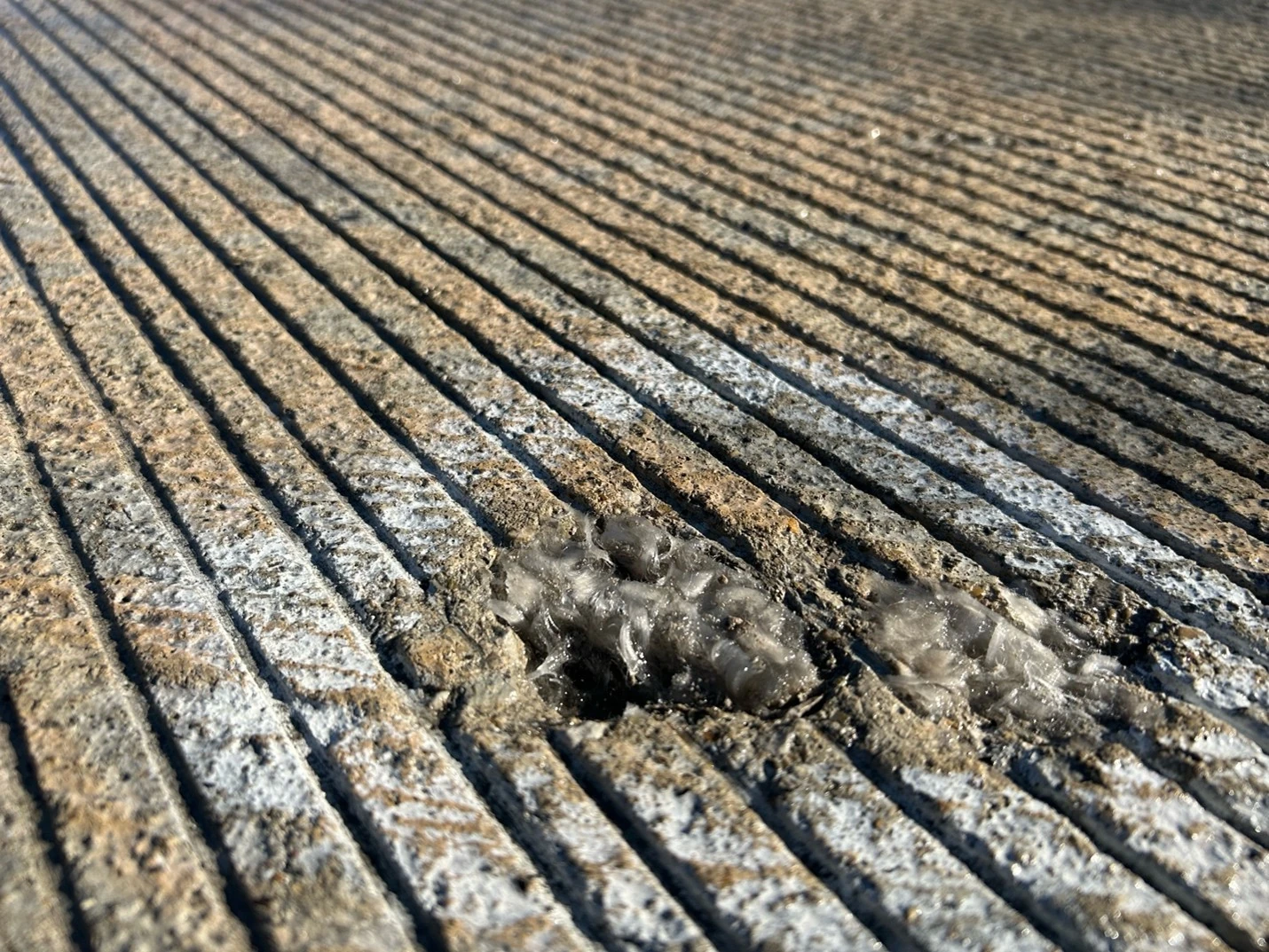
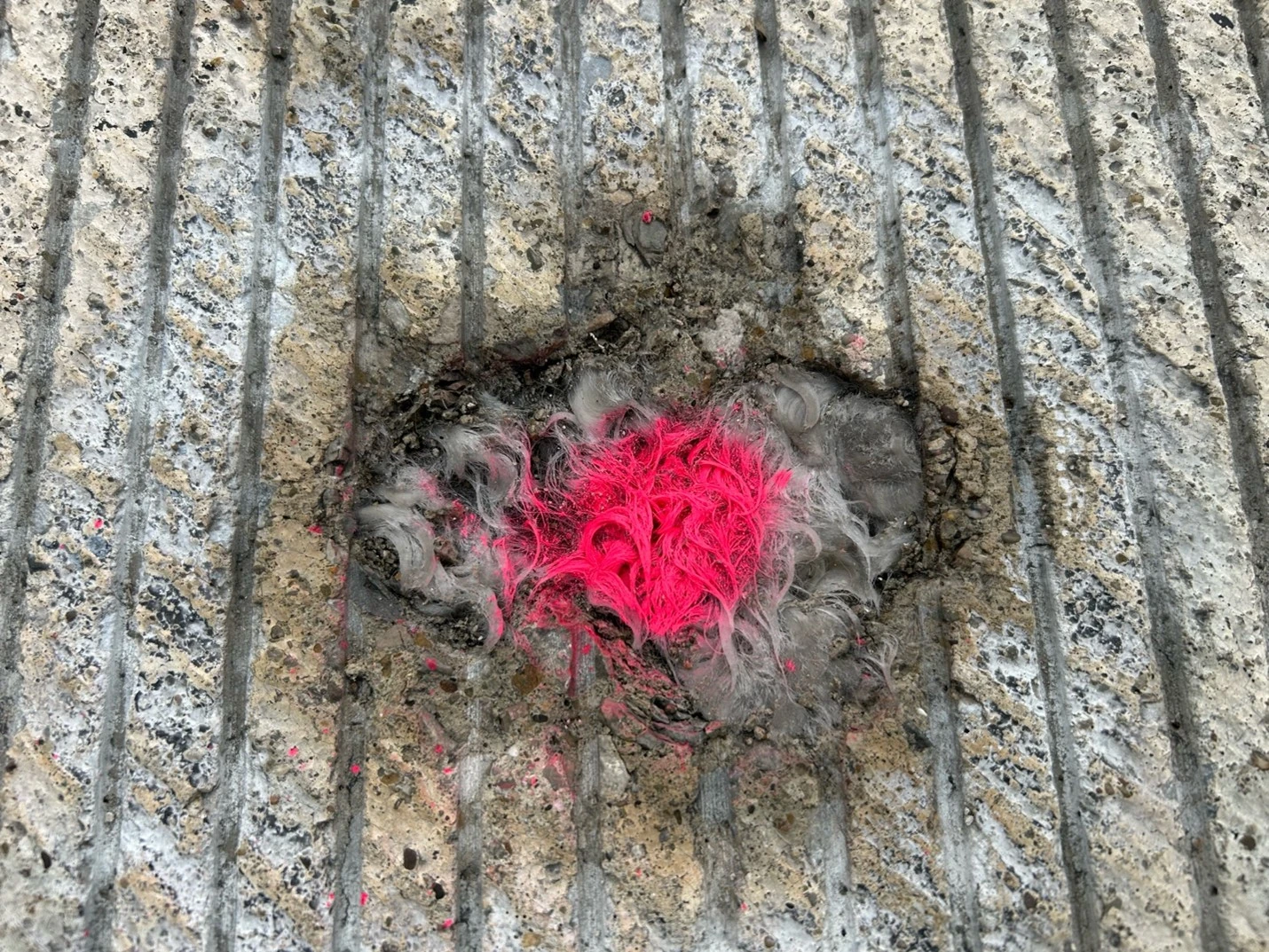
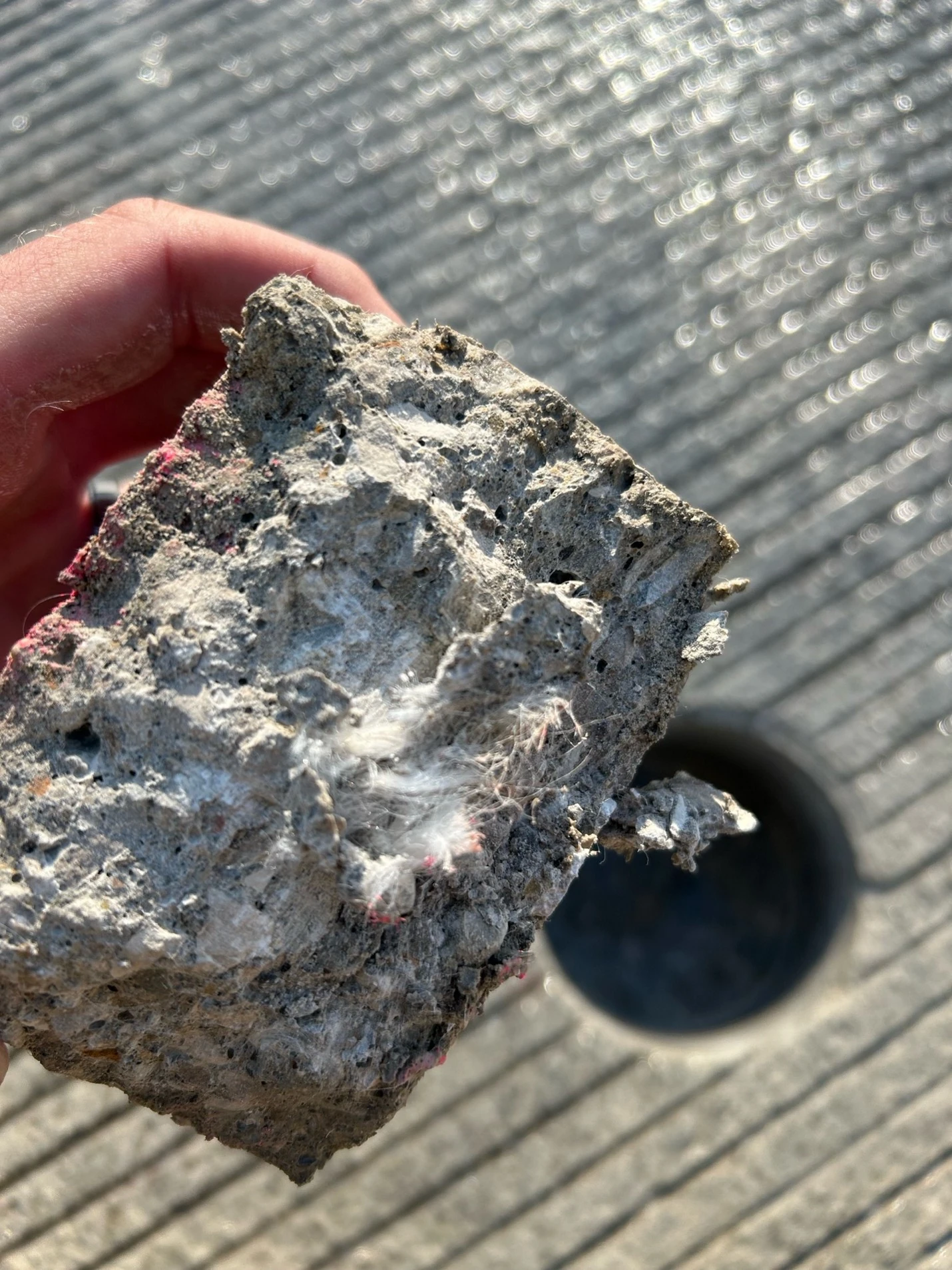
- Andersen Concrete discovered a rare concrete defect after crews noticed cracking and surface imperfections developing in a newly poured topping slab. The issue stemmed from synthetic reinforcement fibers that failed to mix properly during the pour, causing the fibers to clump together into dense masses known as “fiber balls.”
- While some fiber balls had already begun protruding through the surface, the greater concern was the unknown number of hidden defects still embedded within the concrete. Over time, these subsurface fiber balls were likely to migrate upward, creating cracks and compromising the integrity and finish quality of the bridge deck.
- Replacing the entire topping slab would have required extensive demolition, significant costs, and major schedule impacts. Andersen Concrete needed a way to identify and remove only the defective sections while preserving the rest of the newly installed concrete.
- The project also presented a unique scanning challenge. Unlike utilities or rebar that follow predictable linear paths, fiber balls occurred in no particular pattern, as isolated anomalies scattered randomly throughout the slab. Some defects appeared individually while others formed clusters within concentrated areas.
Solution
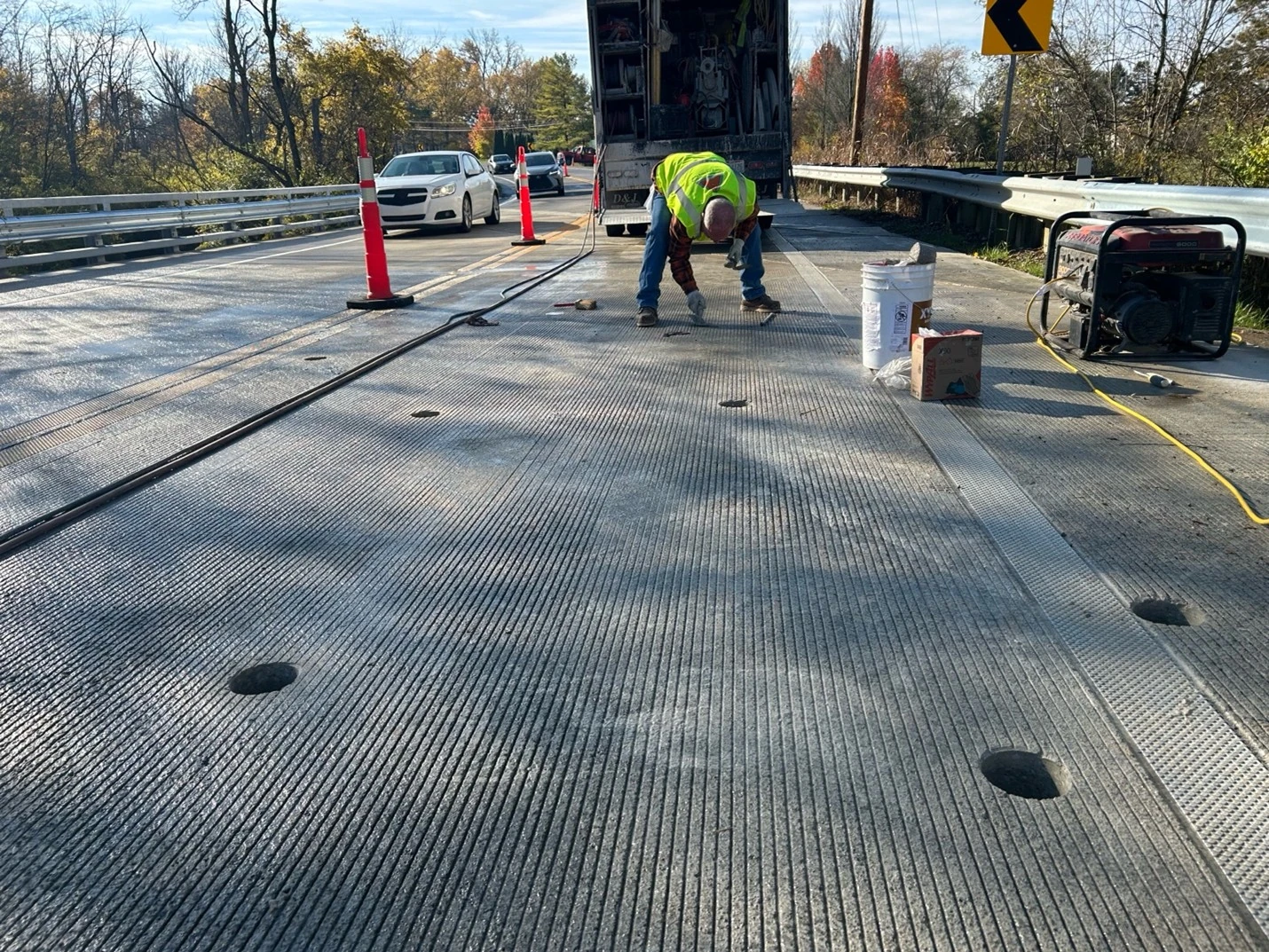
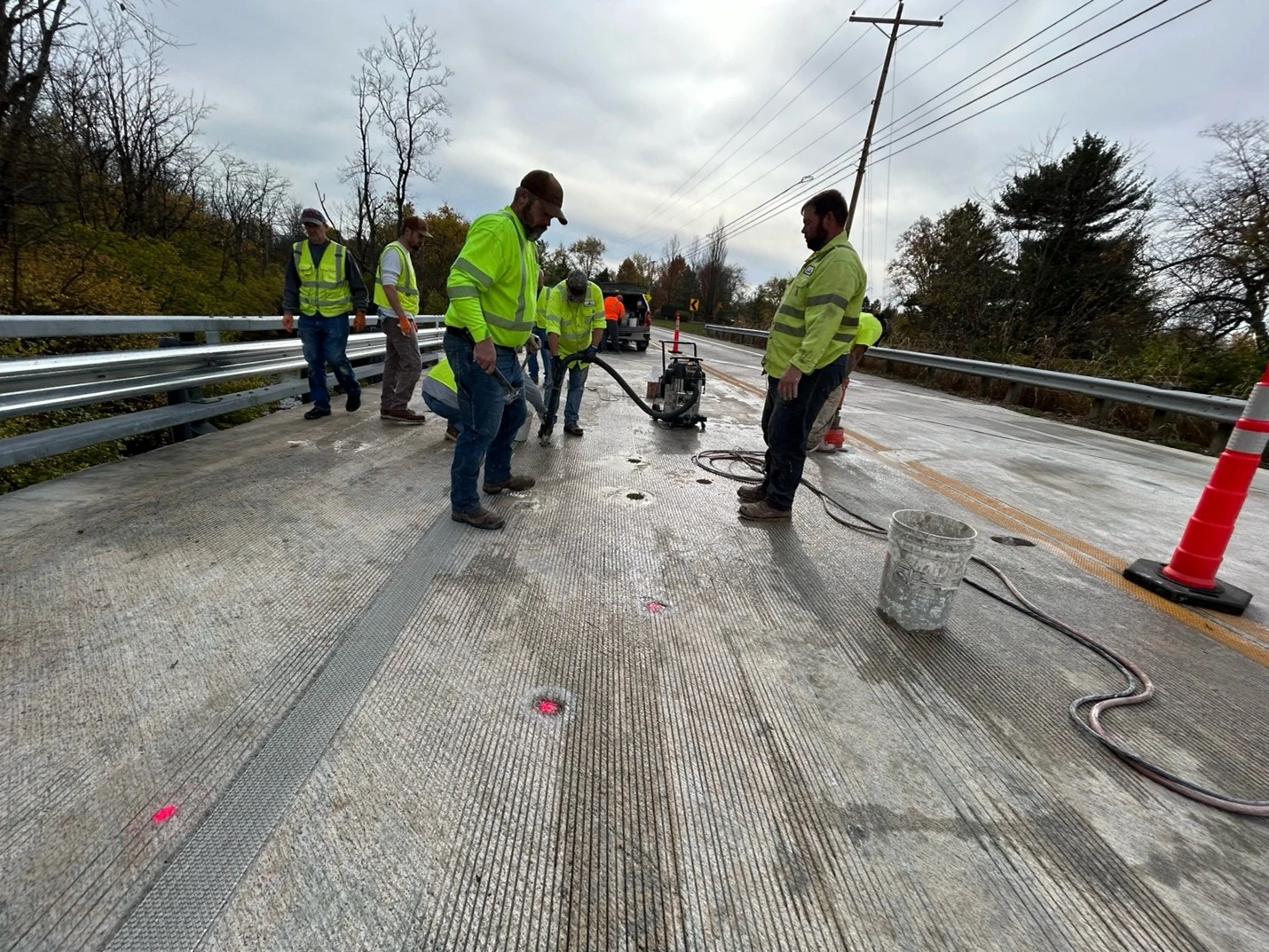
- A GPRS Project Manager utilized a concrete scanner with ground penetrating radar technology to systematically scan the bridge deck and identify anomalous areas likely containing hidden fiber balls.
- Because the defects could appear anywhere within the three-inch topping slab, the scanning process required extremely tight scan spacing and methodical coverage. Rather than scanning broad paths, the Project Manager worked in narrow four-inch increments across the deck to maximize detection accuracy.
- The bridge served as a live proof-of-concept for the process. As anomalies were found, Andersen Concrete crews immediately cored into the slab and confirmed the presence of fiber balls at the marked locations.
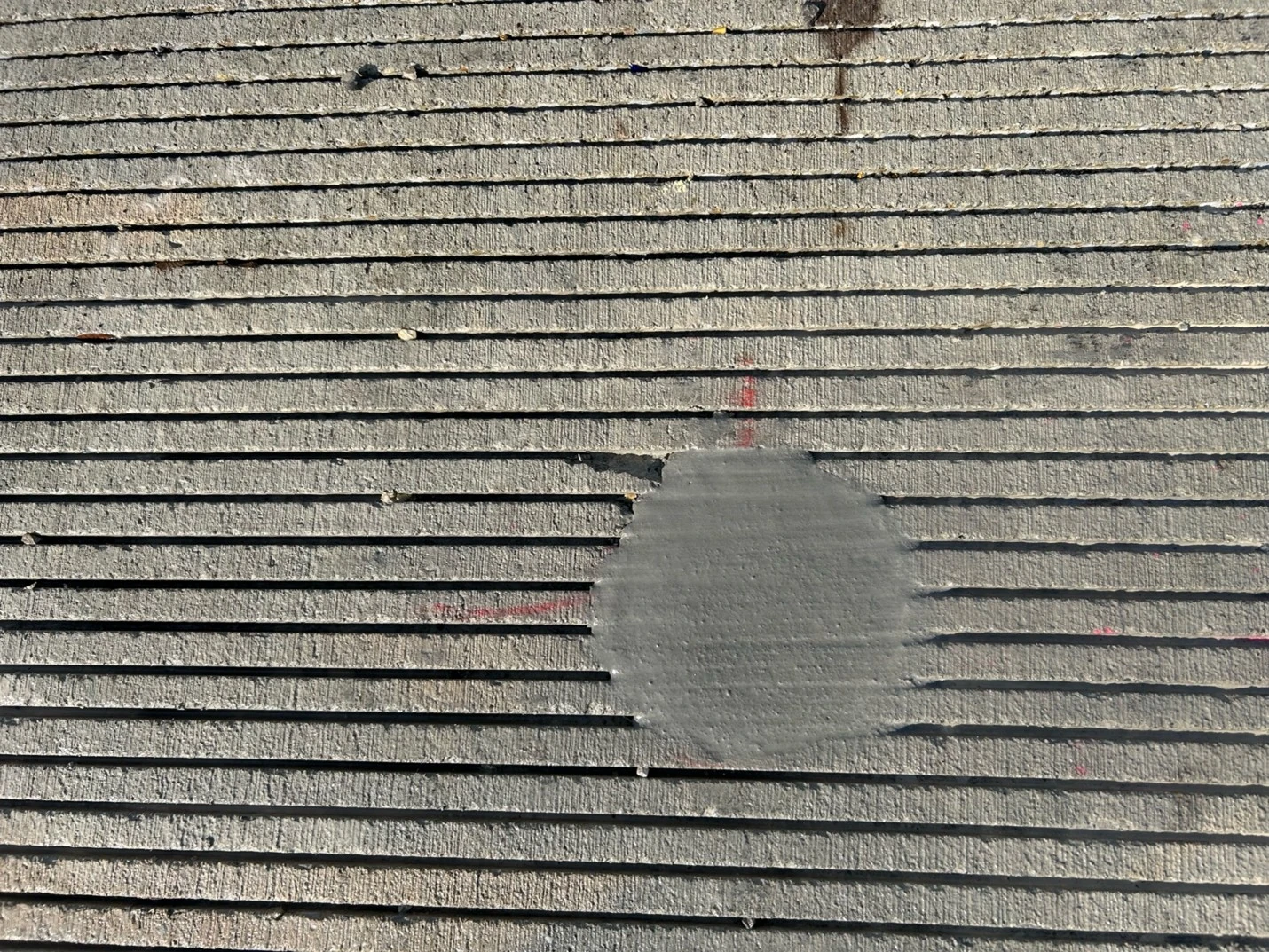
- Some areas contained isolated defects while others revealed concentrated clusters of multiple fiber balls within small sections of concrete. By identifying these locations before the defects surfaced naturally, crews were able to selectively remove compromised material while preserving unaffected portions of the bridge deck.
Outcome
- GPRS helped Andersen Concrete avoid the massive cost and schedule impact of demolishing and repouring the entire bridge topping slab.
- Real-time verification through coring confirmed that GPR scanning could successfully identify hidden fiber ball defects before they surfaced.
- Targeted removals minimized disruption by allowing crews to repair only defective sections rather than replacing sound concrete.
- The project demonstrated a rare but valuable application for GPR concrete scanning in quality control and defect mitigation within newly poured concrete systems.
CASE STUDY GALLERY




.webp)




.avif)
