.svg)

.svg)

GPRS’ 99.8% accurate concrete scans kept all strikes on the field, and not under it, when asked to help Dallas’ AT&T Stadium prepare to take part in the 2026 FIFA World Cup.
In June of 2022, the home of the Dallas Cowboys was chosen to host nine soccer matches for the global event.
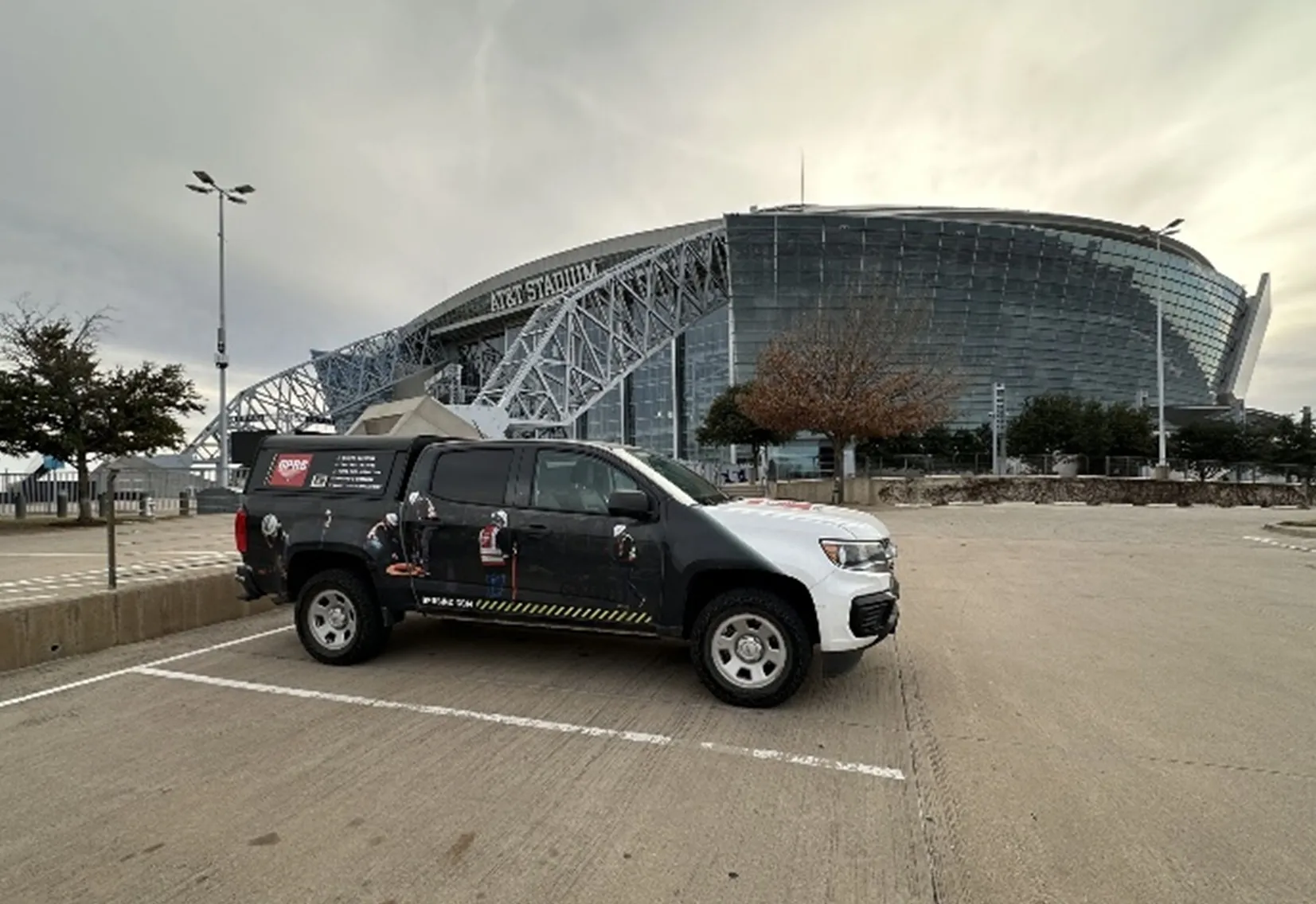
In preparation for the games, Lindamood, Inc. was tasked with expanding the field area. FIFA soccer fields are typically 20-25 yards wider than NFL fields, so they needed to make the necessary renovations to accommodate those regulations. While the wider field represented only one piece of the stadium’s multi-year, 300-million-dollar restoration project, it played a role in the finishing touches that the client needed to execute closer to the first game that would be played on June 14, 2026.
In January of 2026, the Dallas Cowboys’ season officially ended when they were eliminated from playoff contention. This meant it was time to make the final renovations to the stadium for the other football games to come this summer. This is where GPRS comes in.
Dean Sturt was one of the GPRS Project Managers on site. He explained the following when asked what renovations they had planned and how GPRS’ concrete scanning services helped.
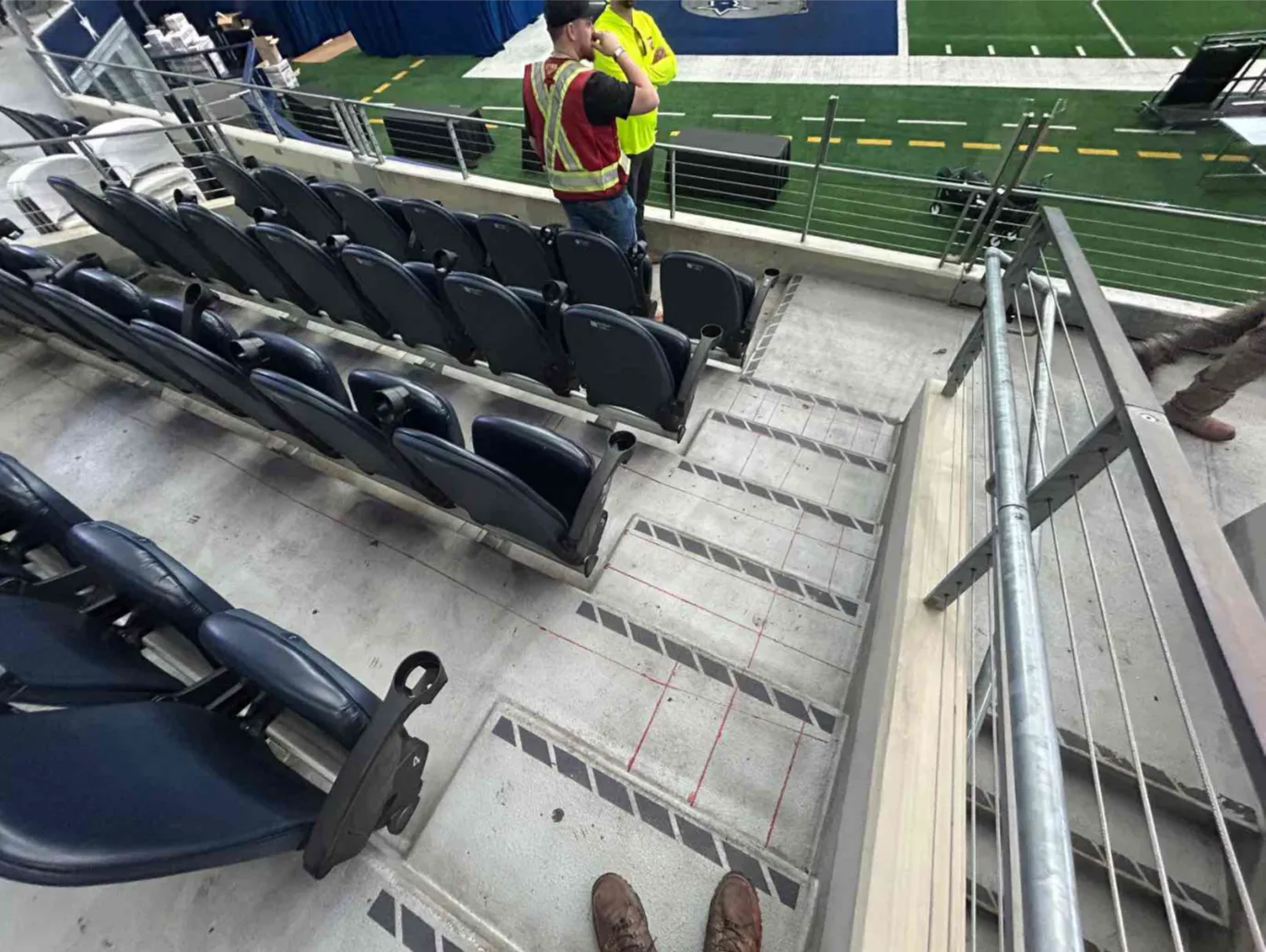
“Basically, what they're doing is chopping out the corners of the stands, which were all precast,” Sturt explained. “They're all precast panels and had pillars and beams that those precast panels would sit on. Then, the bleachers were all anchored to those precast panels. Our job was marking out all that rebar below it to make it easier for them when they anchor into those stands to pull them out, so that they're not hitting that rebar.”
Anchoring into concrete is the process of fastening objects or structures to concrete with specialized hardware. This process entails drilling appropriately sized holes into the concrete, inserting the specific anchor, and tightening or bonding it until the connection is secure. Because it can ensure the area is stable, anchoring is widely used when installing mass amounts of stadium seating that will deal with mass amounts of foot traffic.
When drilling into concrete, cutting through rebar or other reinforcements like conduits and post tension cables can lead to costly repairs, project delays, and serious injuries. That’s why GPRS highly recommends hiring concrete scanning professionals before cutting or coring into any slab.
The client didn’t have any current plans or as-built drawings that would indicate where any rebar is located.
Sturt and the other field team members utilized ground penetrating radar (GPR) to locate the subsurface rebar.
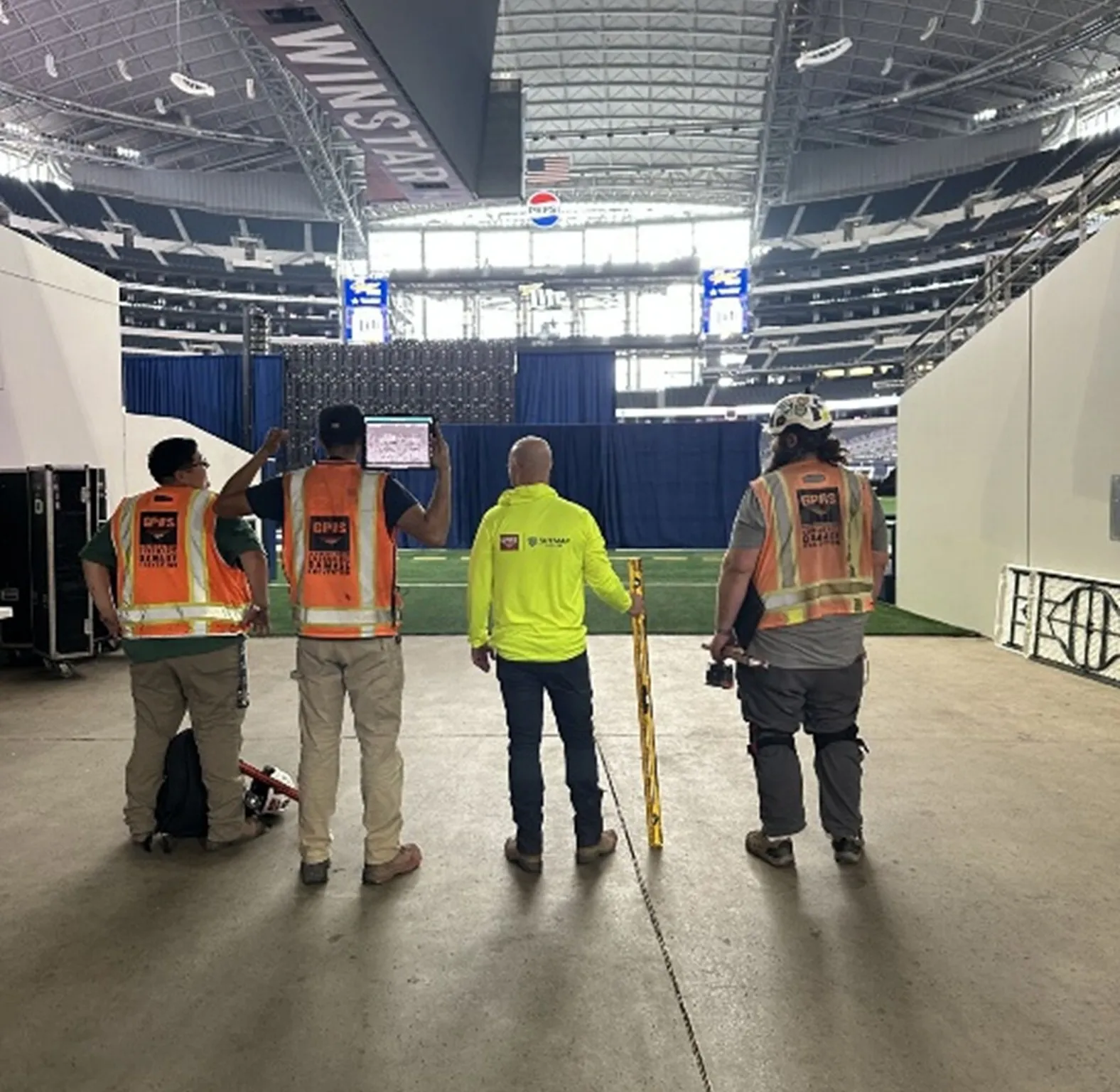
All GPRS Project Managers undergo hundreds of hours of training in the field and classroom settings to learn how to properly read GPR results. These results populate onto a tablet and are displayed through many hyperbolas that are used to assess what’s beneath the slab. To the untrained eye, it can seem like nothing. To the well-trained eyes of our elite team of visualization professionals, they paint a clear picture of where it is and isn’t safe to dig, cut, or drill.
They marked their findings on the surface using red markers. Through a post scan site walk and the information provided in the Job Summary Report, our field team was able to communicate the safest way to anchor into the slabs and remove the necessary seating areas safely and efficiently.
From sewer to stadiums to skyscrapers, GPRS Visualizes the Built World® above- and below-ground to keep your projects on time, on budget, and safe.
What can we help you visualize?
FREQUENTLY ASKED QUESTIONS
How does GPRS contribute to jobsite safety in construction?
GPRS’ #1 focus is safety and part of our mission is the pursuit of 100% subsurface damage prevention because sending your team home safe and sound every day is the most important job we can help you do.
Our Subsurface Investigation Methodology (SIM) provides the gold standard in underground utility locating and concrete scanning, so we can help you ensure your team is clear to cut, core, or drill with confidence. Our Video Pipe Inspection services provide NASSCO-compliant PACP-coded defect and condition reporting, pipe locations, and more. And, our reality capture services provide 2-4 millimeter-accurate structural measurements to help you avoid clashes, reworks, and downtime. Because when you know what’s hidden/underneath, you can build more safely.
Can GPR scan concrete slab-on-grade?
Yes, it can. Unlike with X-ray, where both sides of a concrete slab must be accessible to obtain a picture of the subsurface structure, GPR only requires access to one side of a slab to obtain a comprehensive view of what’s inside the slab. This makes it an ideal technology for evaluating concrete slab-on-grade.
Can GPRS scan vertical surfaces or ceilings?
Yes, GPR can scan for the location of rebar in concrete columns and walls. It can also scan the underside of a floor to mark out the reinforced steel and any embedded conduits.